Sagrits Museum – Kalame Farm, Karepa
06.06.2026-06.09.26
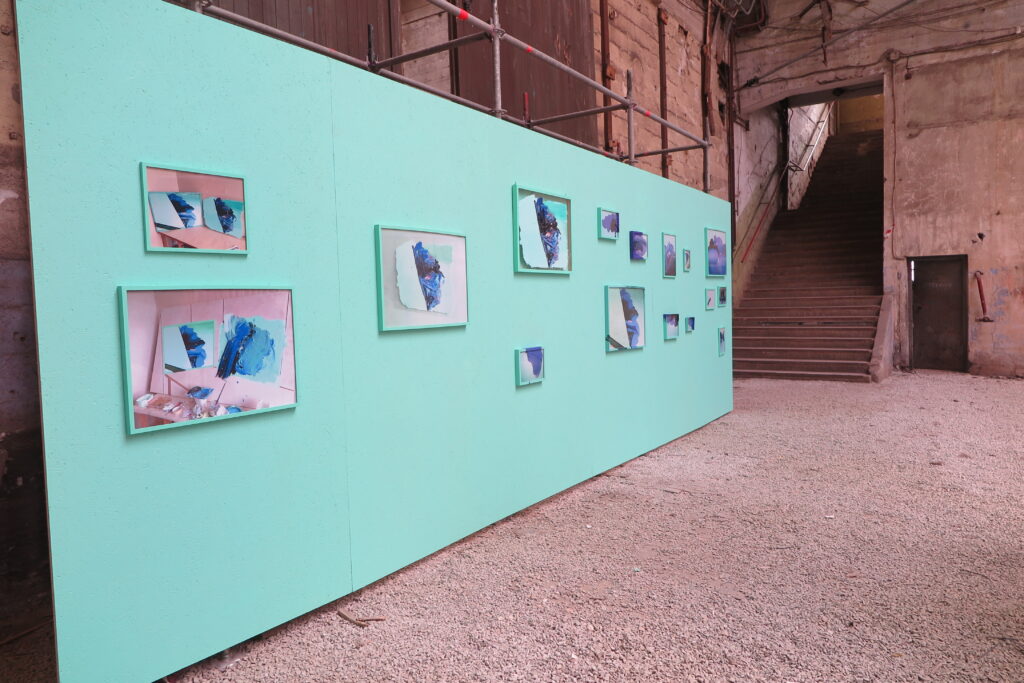
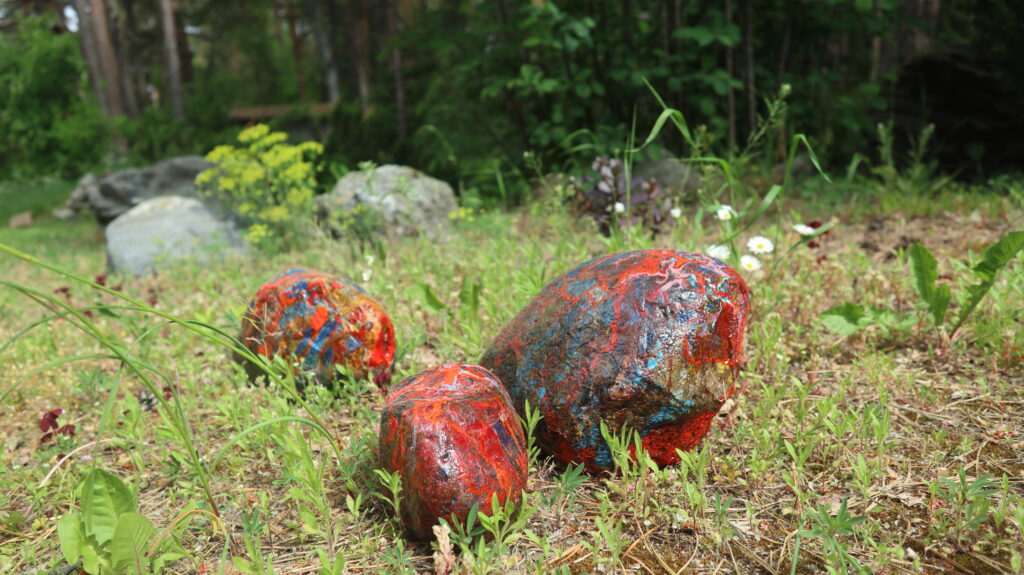
Karepa Stones: Material for Painting and Myths
Curator: Rael Artel
Artists: Liisi Eelmaa, Kai Kaljo, Richard Sagrits, Richard Uutmaa
Curator Rael Artel: “Stones are not merely natural objects; they are carriers of time and embodiments of primordial materiality. Their existence can be measured on a timescale against which human life, political systems, and even cultural history seem like swiftly passing wisps of cloud. Geological processes give stones a dimension that lies beyond human perception of time. A stone is therefore not simply part of the landscape, but a material that establishes its own pace and presence.”
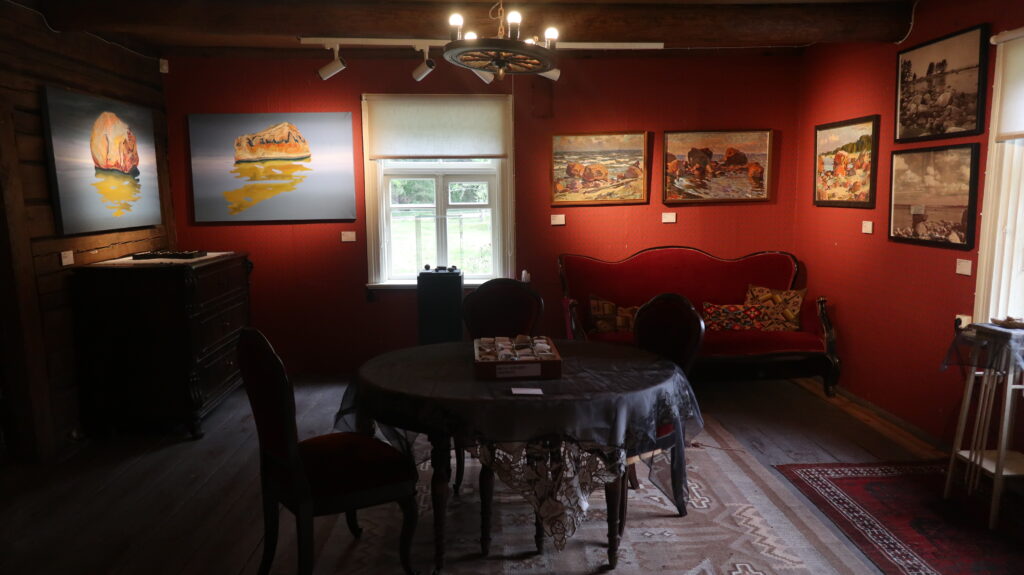
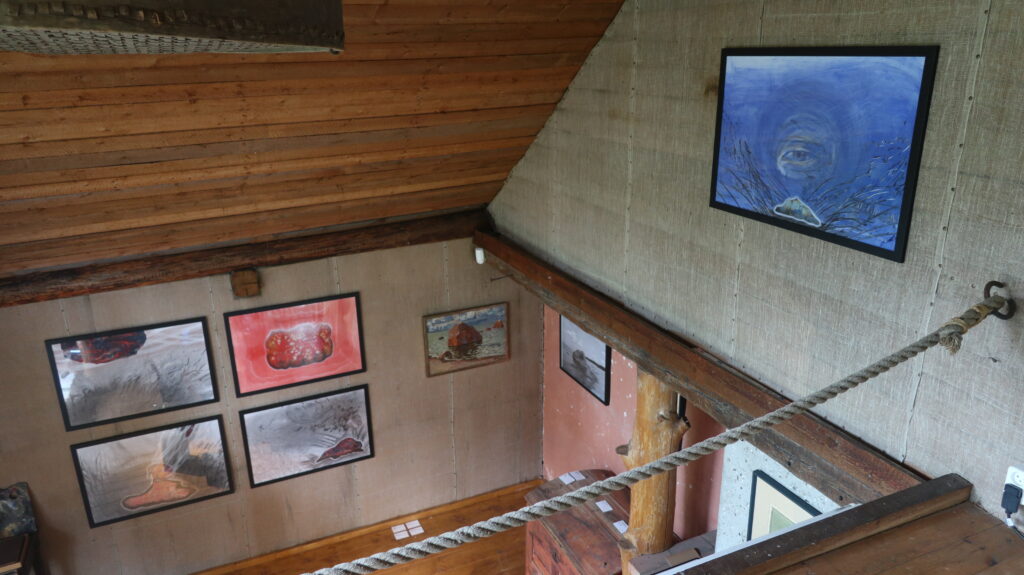
The exhibition Karepa Stones: Material for Painting and Myths seeks to see more in painting than the depiction of nature. Here, landscape and seascape paintings appear as attempts to relate to something far older and more enduring than humanity. Stone provides a new lens through which to view painting: attention shifts from motif to time, from surface to matter, and from the momentary to the enduring. The exhibition weaves together artworks, folklore, everyday objects, and performative gestures, yet at its core remains a single material—stone.
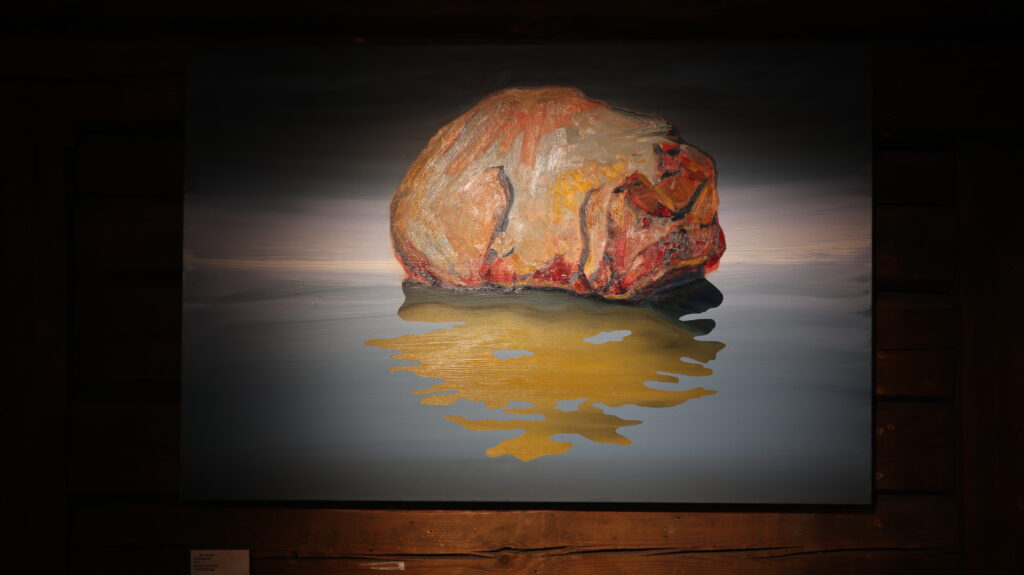
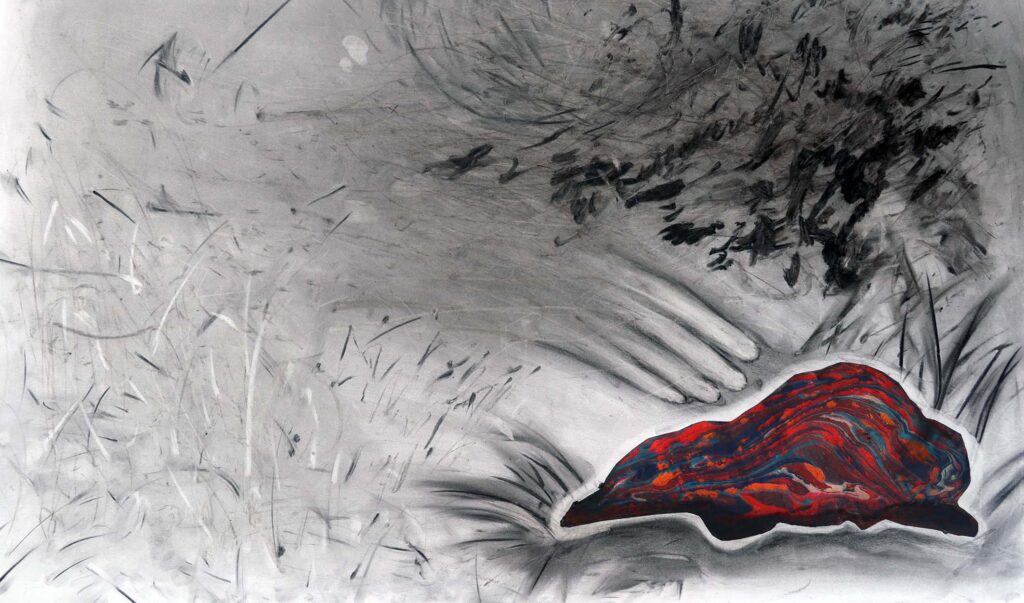
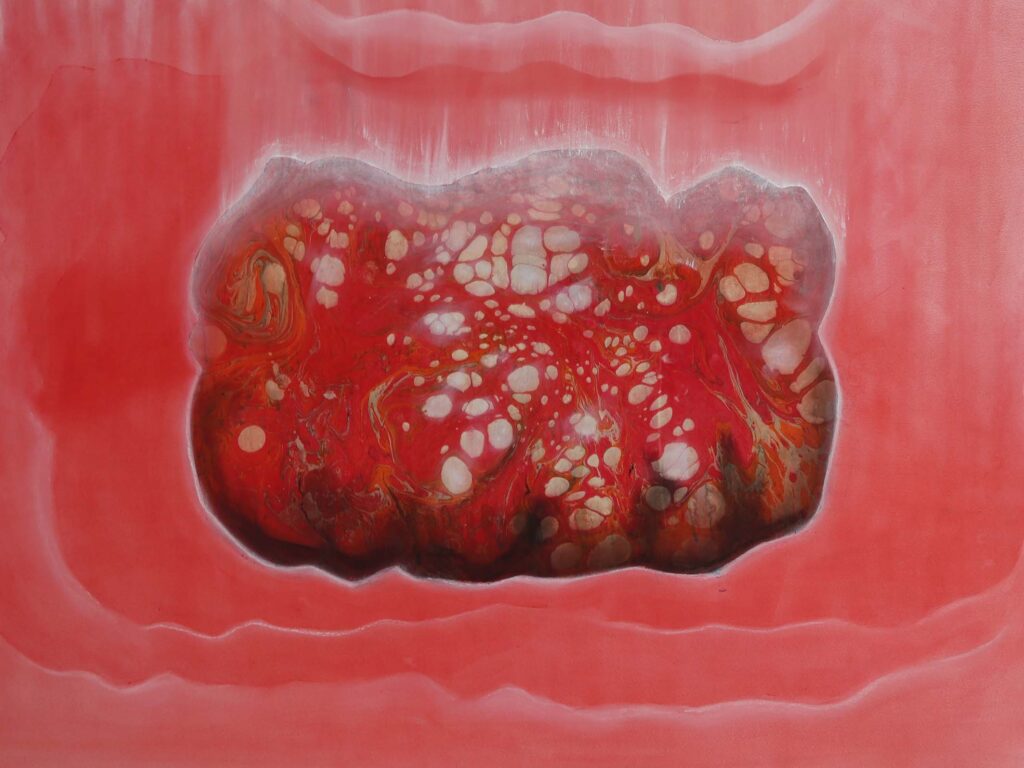
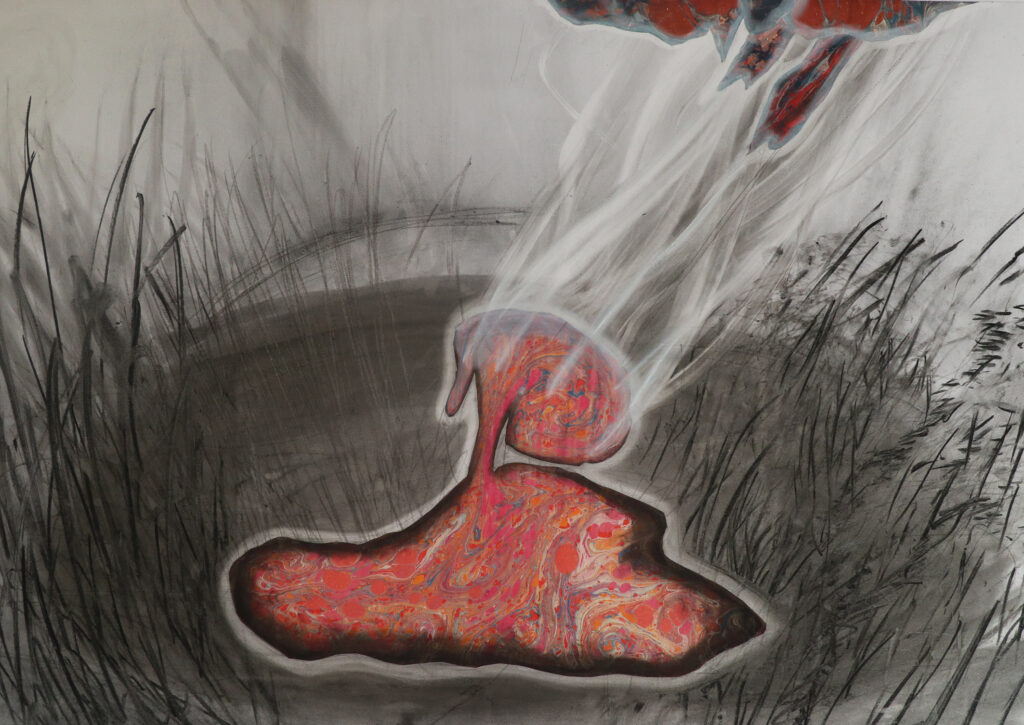
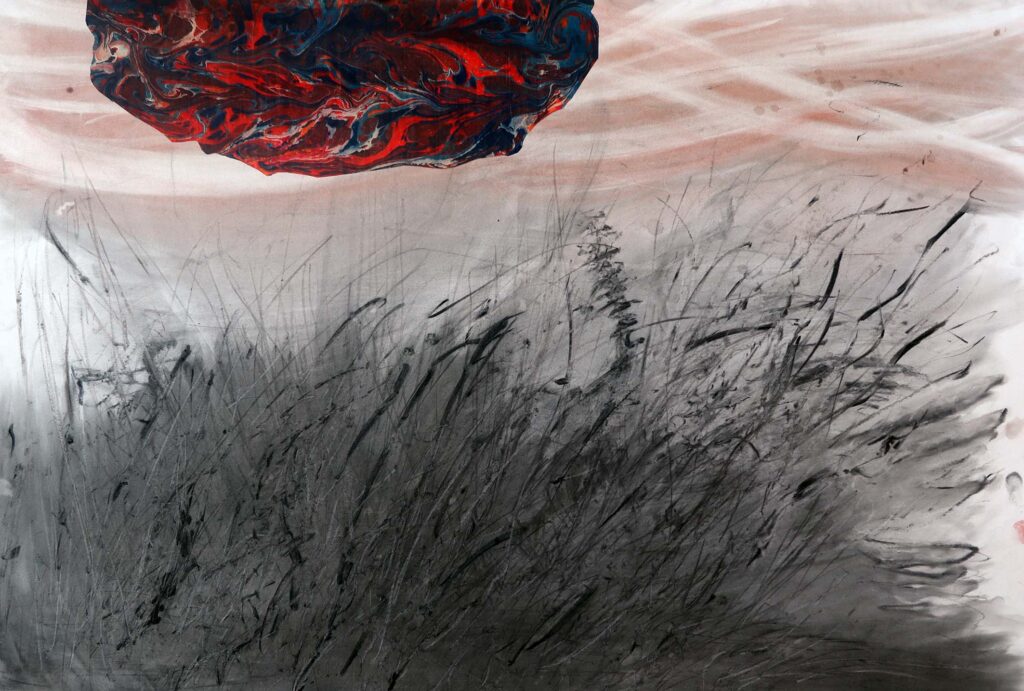
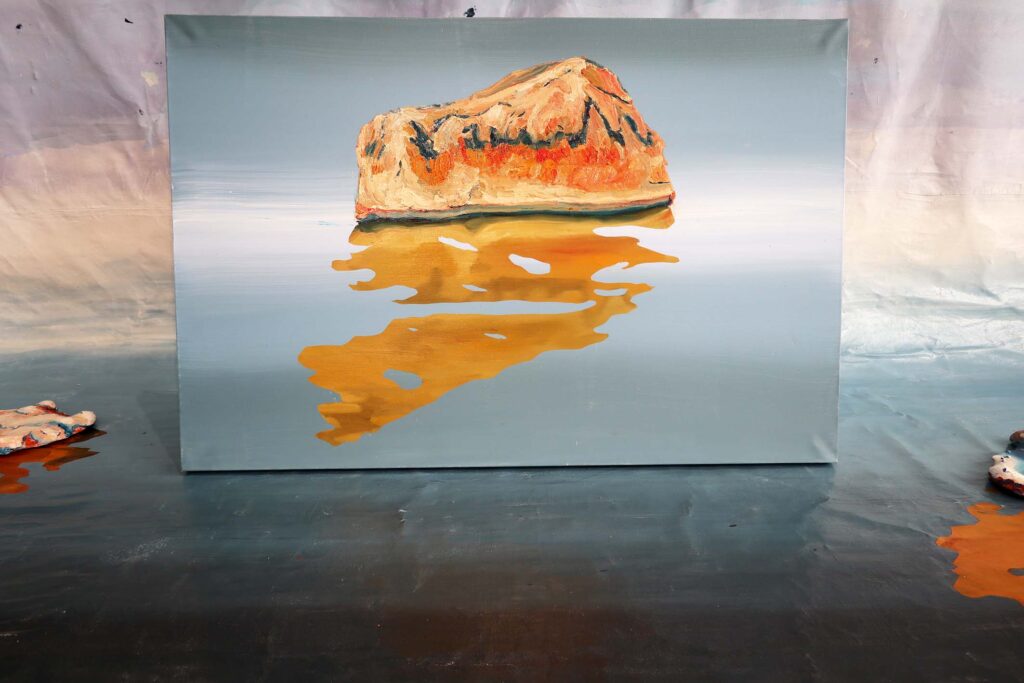
Two of the most renowned and prolific Estonian marine painters, Richard Sagrits (1910–1968) and Richard Uutmaa (1905–1977), lived and worked during the summers on Estonia’s northern coast, one in Karepa and the other in Eisma. As both artists were fascinated by the sea in all its many forms, they could hardly avoid being drawn to stones as well. Alongside works by Sagrits and Uutmaa, Kalame Farm presents stone paintings by Liisi Eelmaa (b. 1983), depicting glacial boulders half-submerged in mirror-smooth water. Kai Kaljo’s (b. 1959) work Travelling Stones approaches stones as migrating objects, releasing them back into nature. The exhibition also features works by photographers Carl Sarap, Viktor Salmre, and Johanna Triefeldt.
Vabaduse Gallery
14.11.2025-10.12.2025
“In the Painting Hall” Vabaduse Gallery
Curator: Mae Kivilo, Marge Martin
Artists: Malle Leisi, Eldor Renteri, Andres Koorti, Mauri Grossi, Hardi Volmeri, Pille Jänese, Erki Kasemetsa, Liisi Eelmaa,
Illimar Vihmari, Estookin
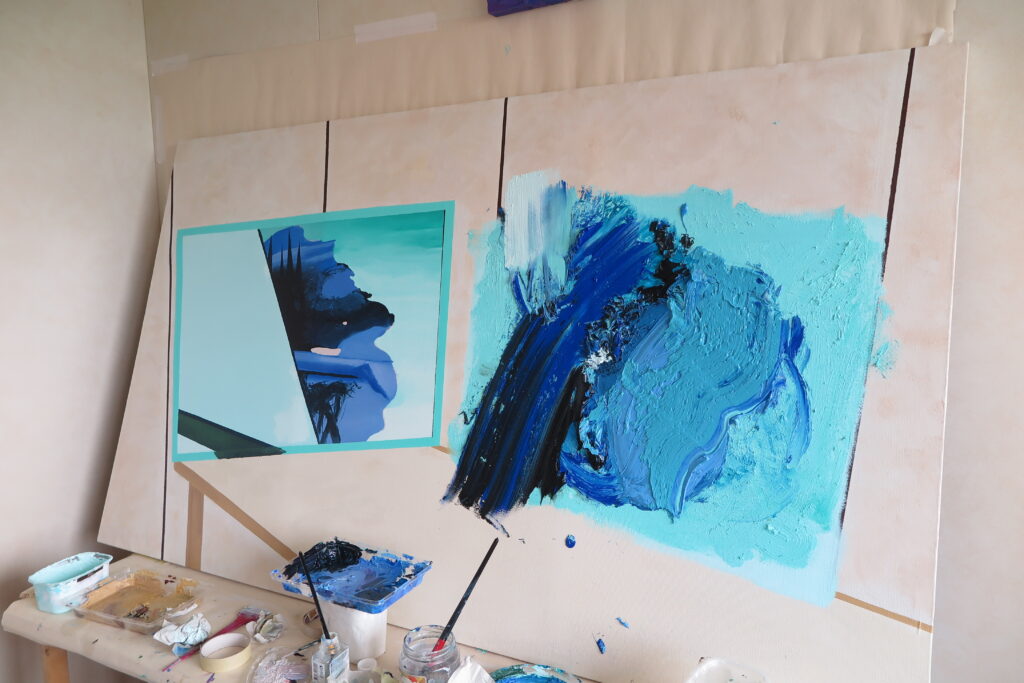
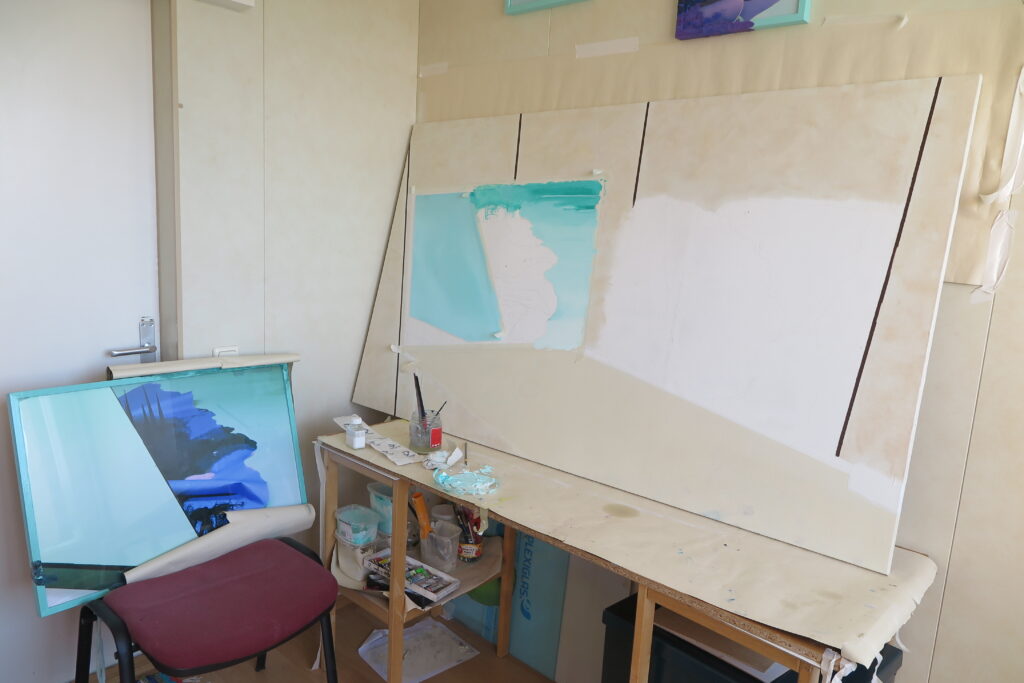
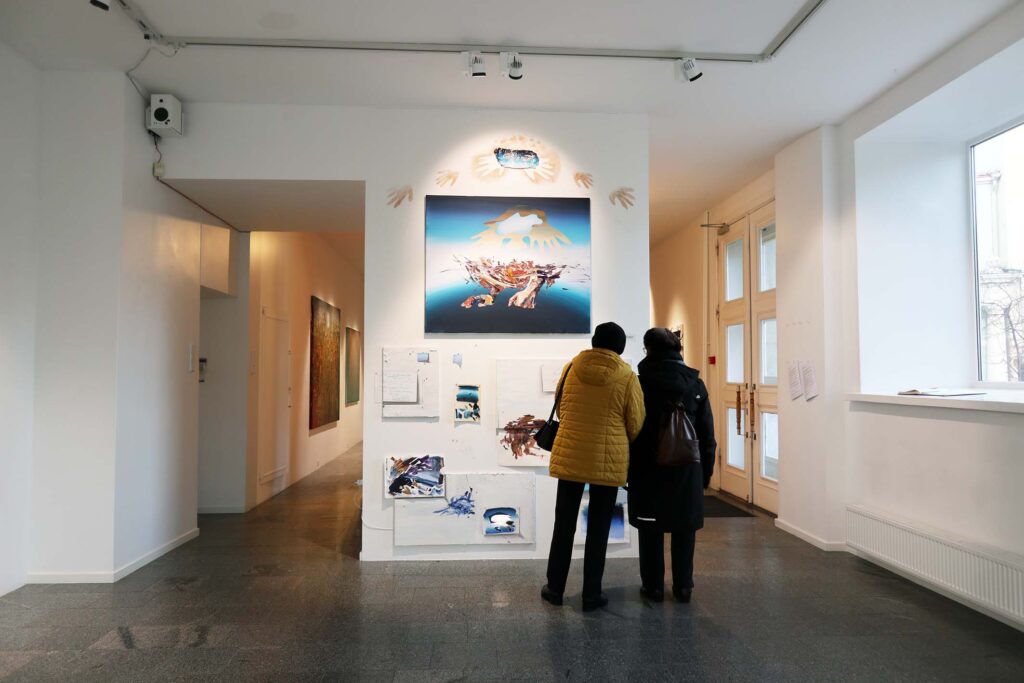
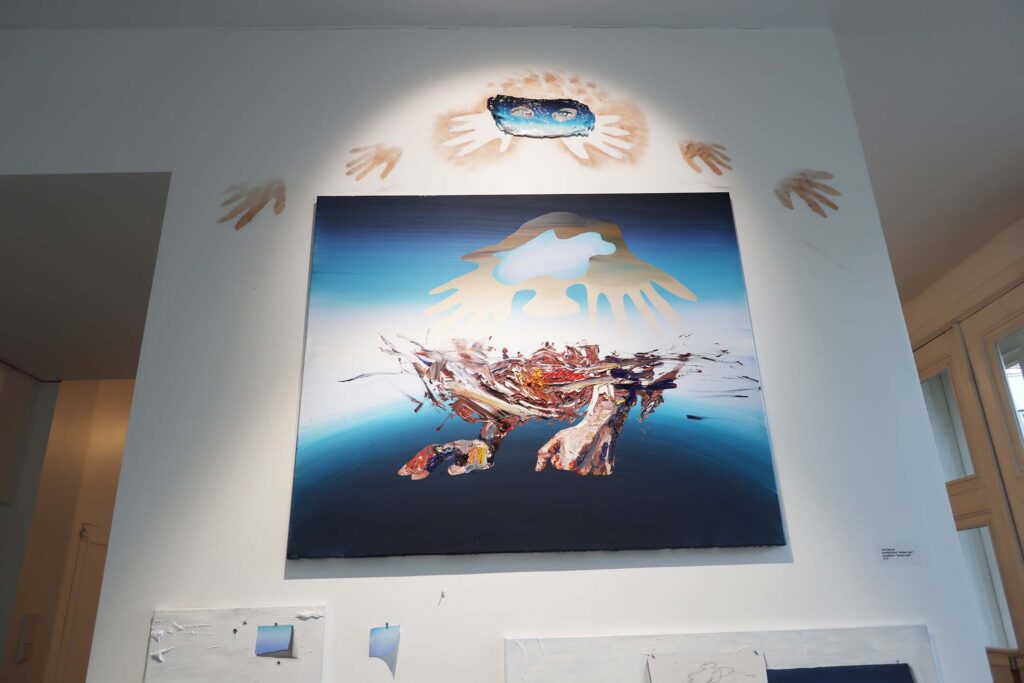
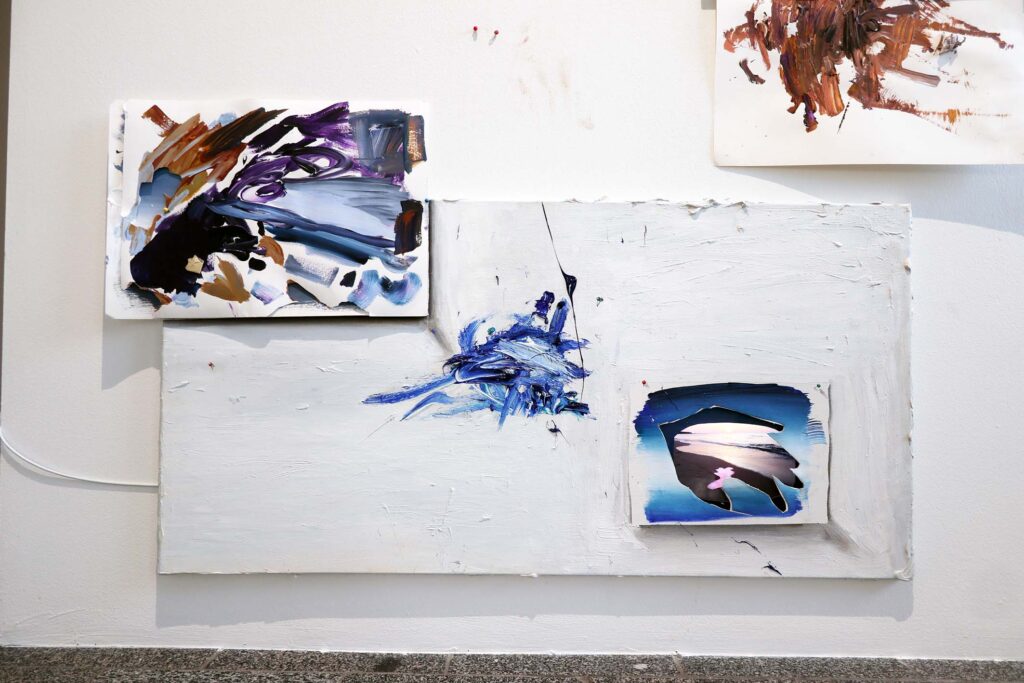
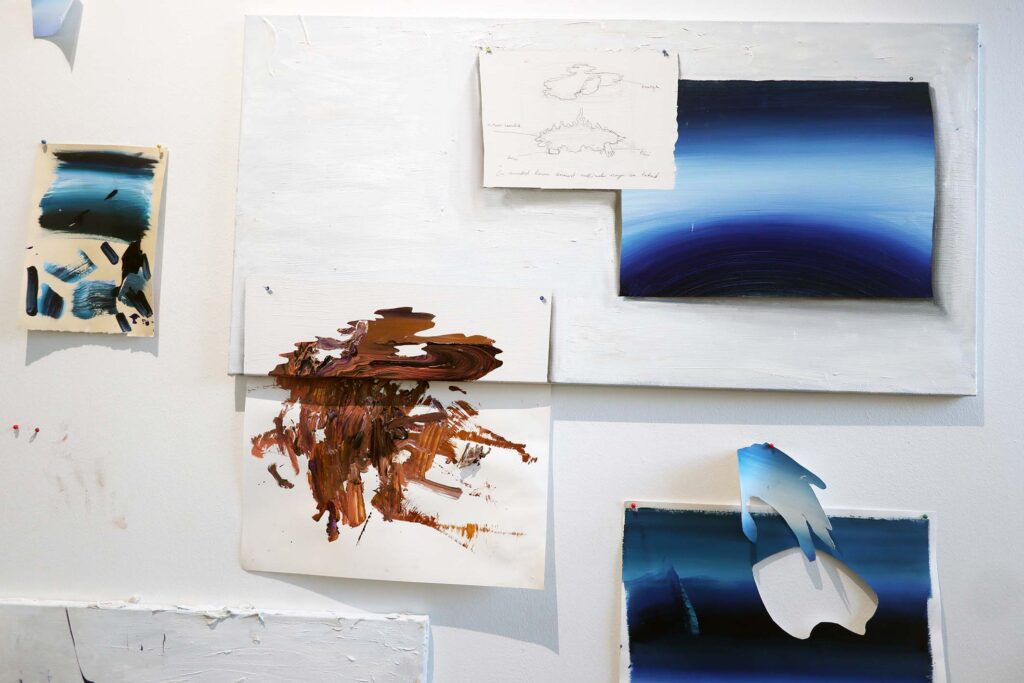
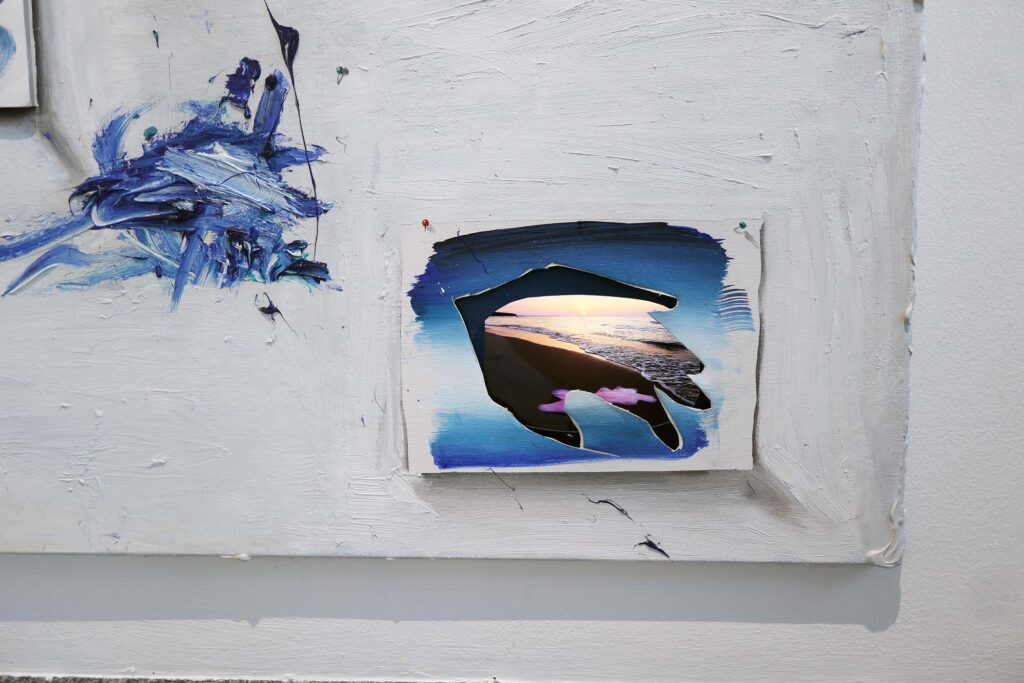
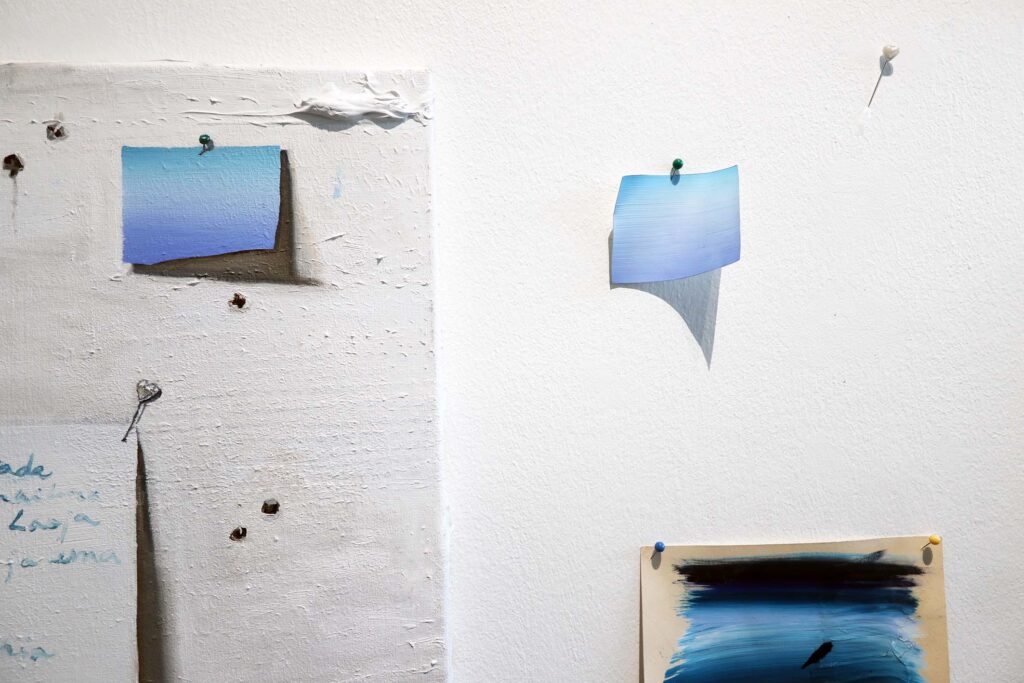
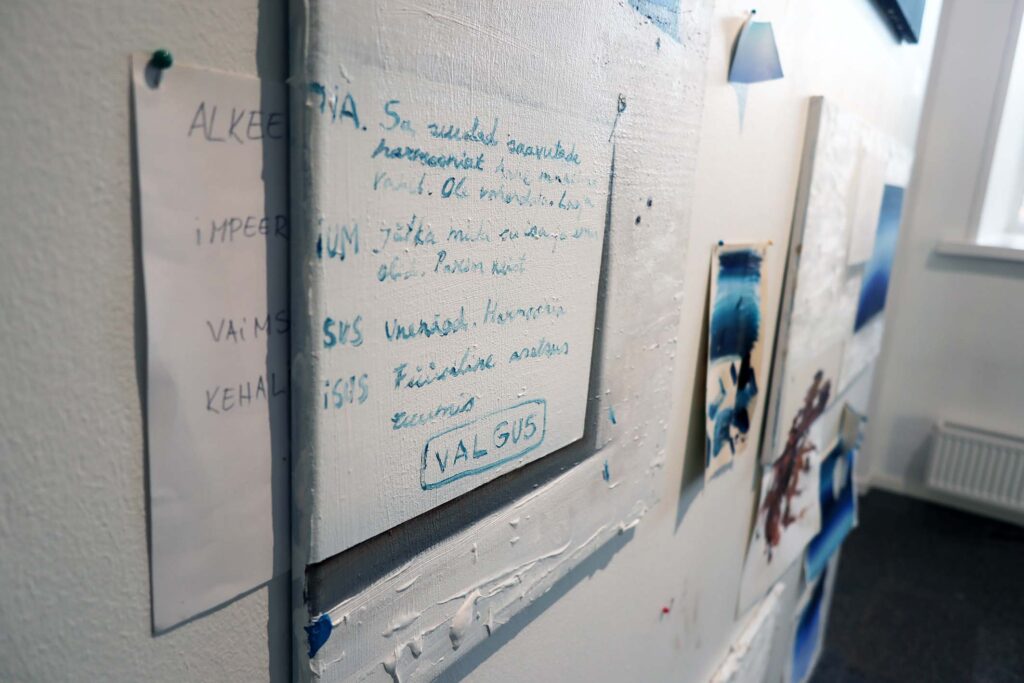
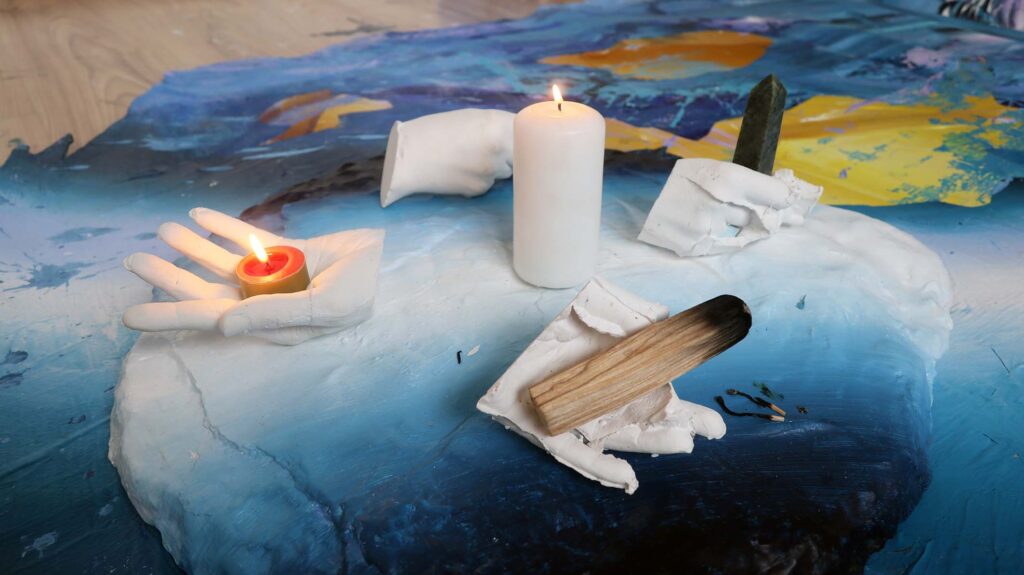
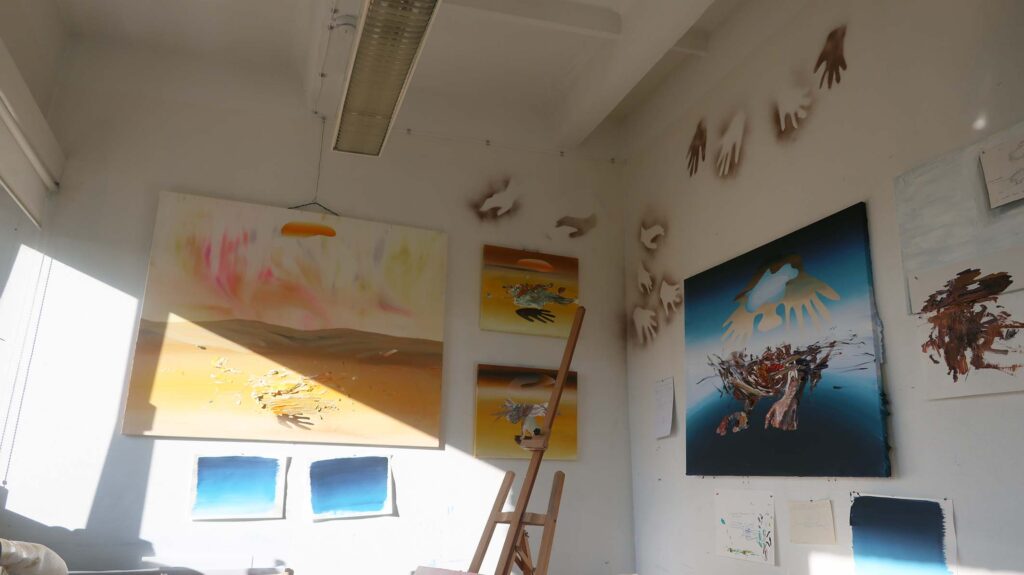
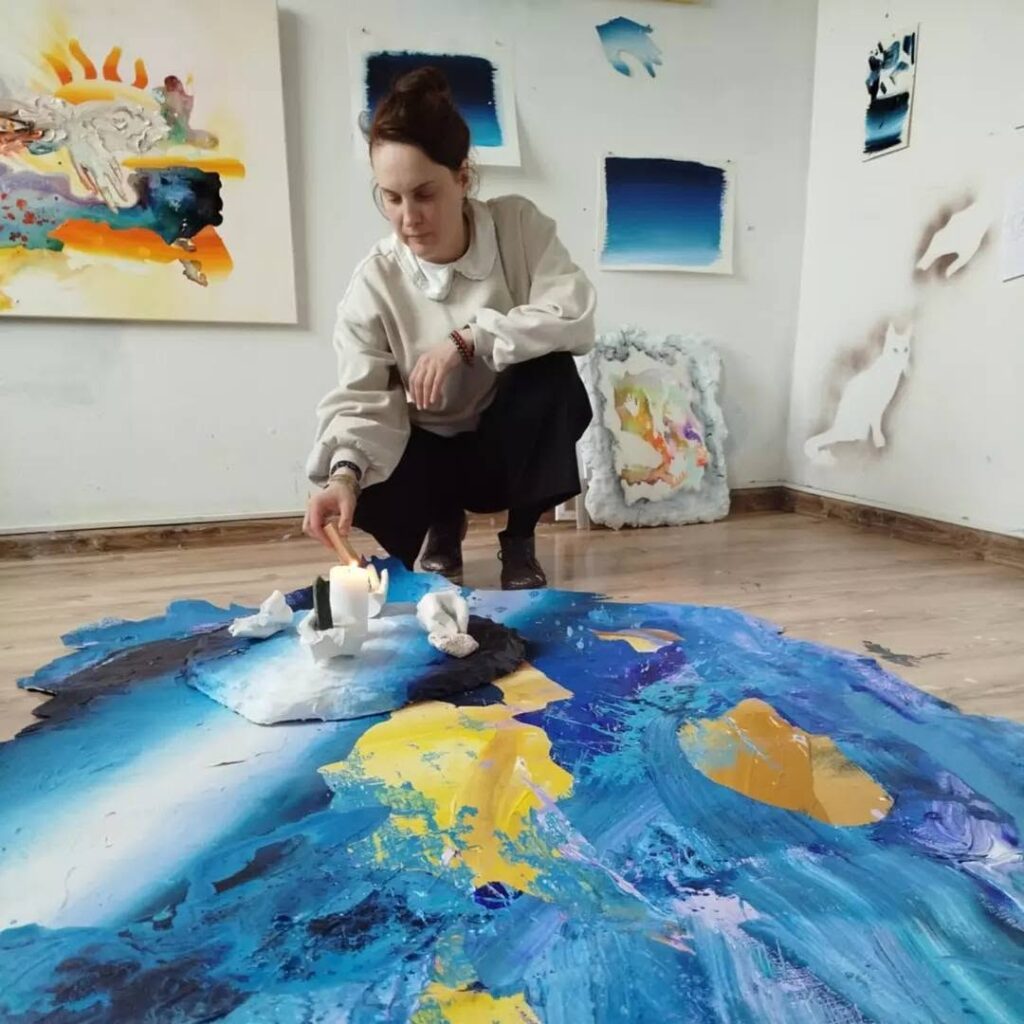
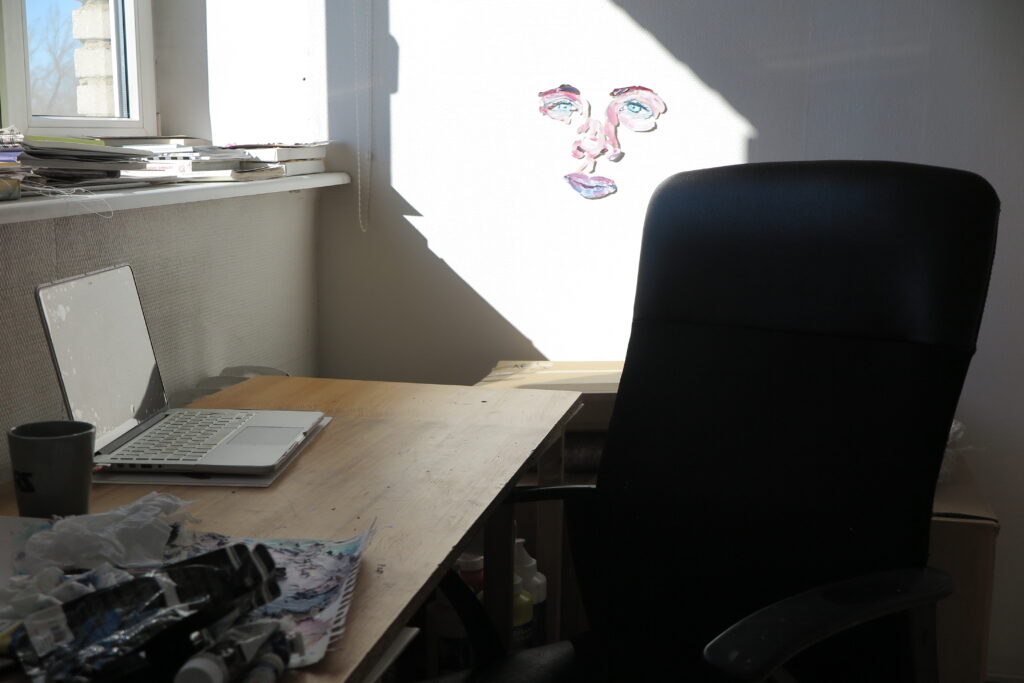
Liisi Eelmaa “Studio is a place where I go to create, an honest and raw reality, not like the space of gallery. Studio is always messy for some reason, the material world has no power there, it is forgotten or drops somewhere in the corner and stays there, unimportant. It is a place, where nobody else is looking, and there is no desire of the artist to be clearly understood, seen, or bought.
A place where I go to meet the spirit, finding it, and the material world is left behind on the way. The works that appear on the walls are wishes, prayers and presence, that the rational mind hasn’t subdued. A weird recognition in aspiration, that is also present in old cave paintings, that are many centuries old. Isn’t the studio a cave with cave paintings, with manifestations?”
Draakon Gallery
12.06.2024-06.07.2024
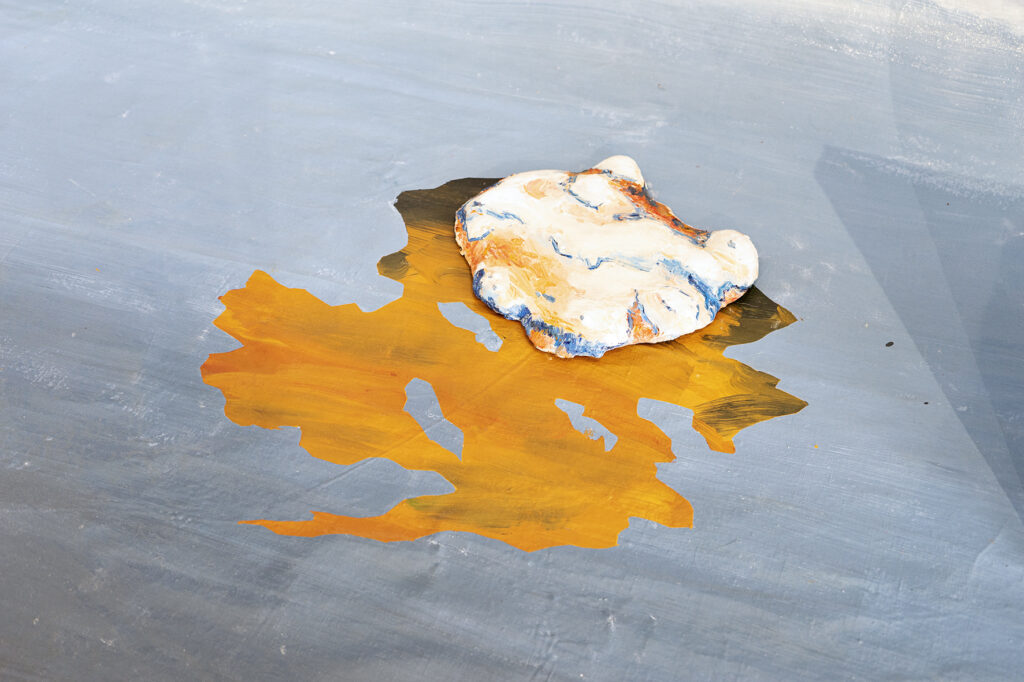
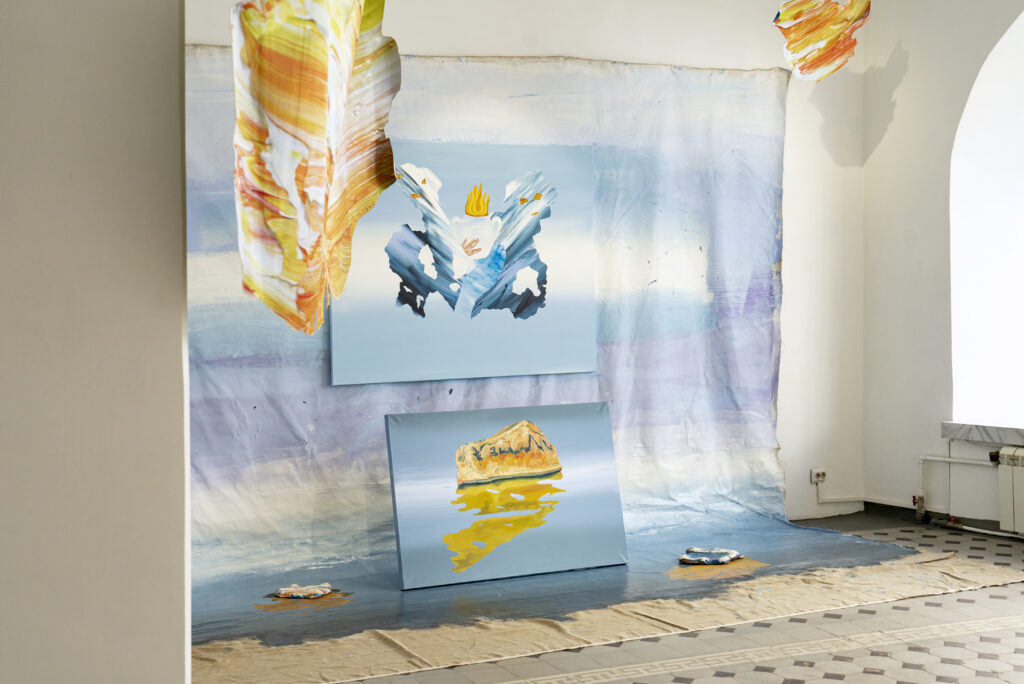
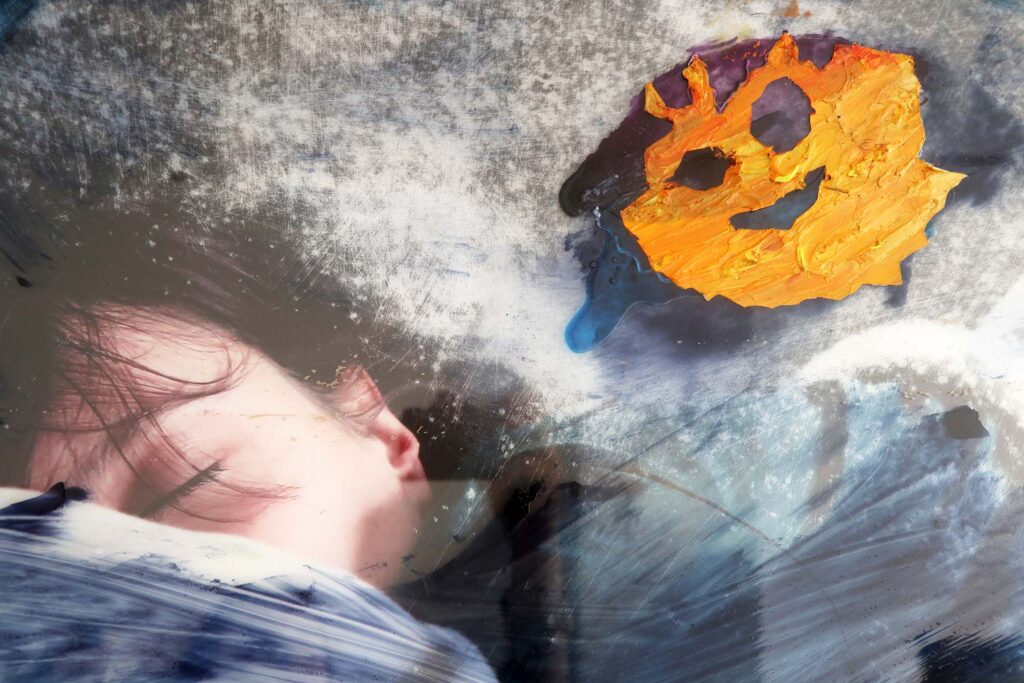
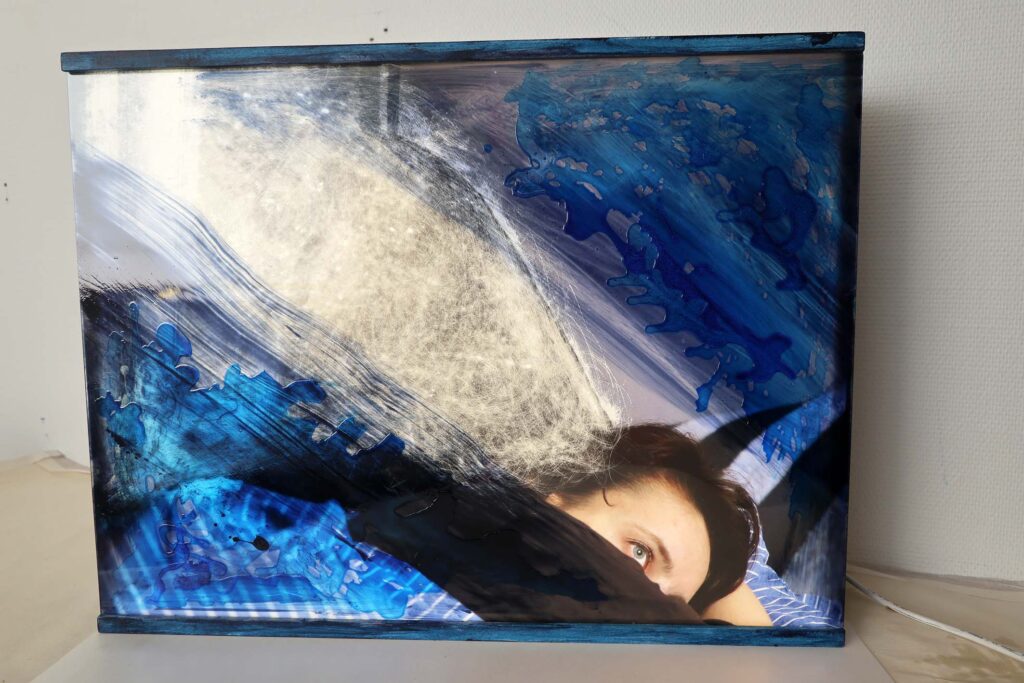
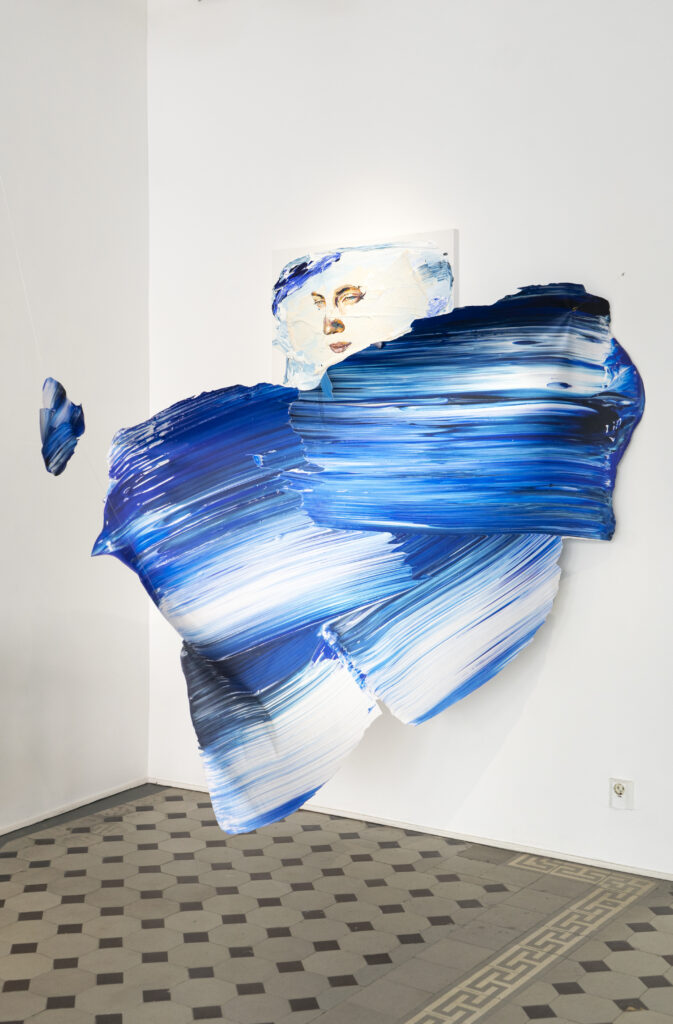
“I create what I see” – ABACADABRA
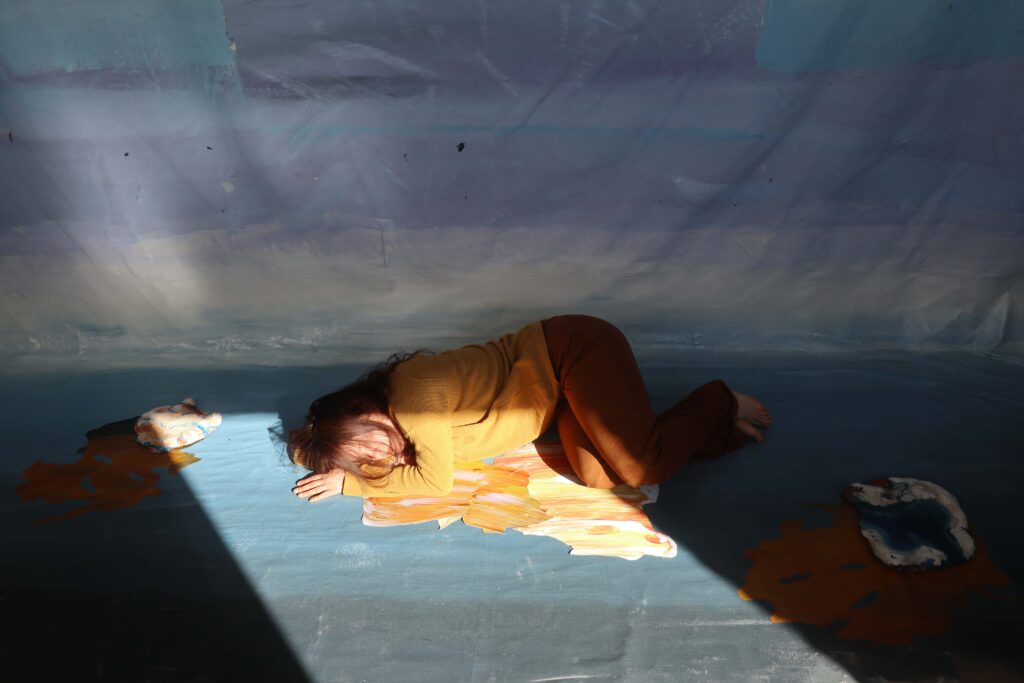
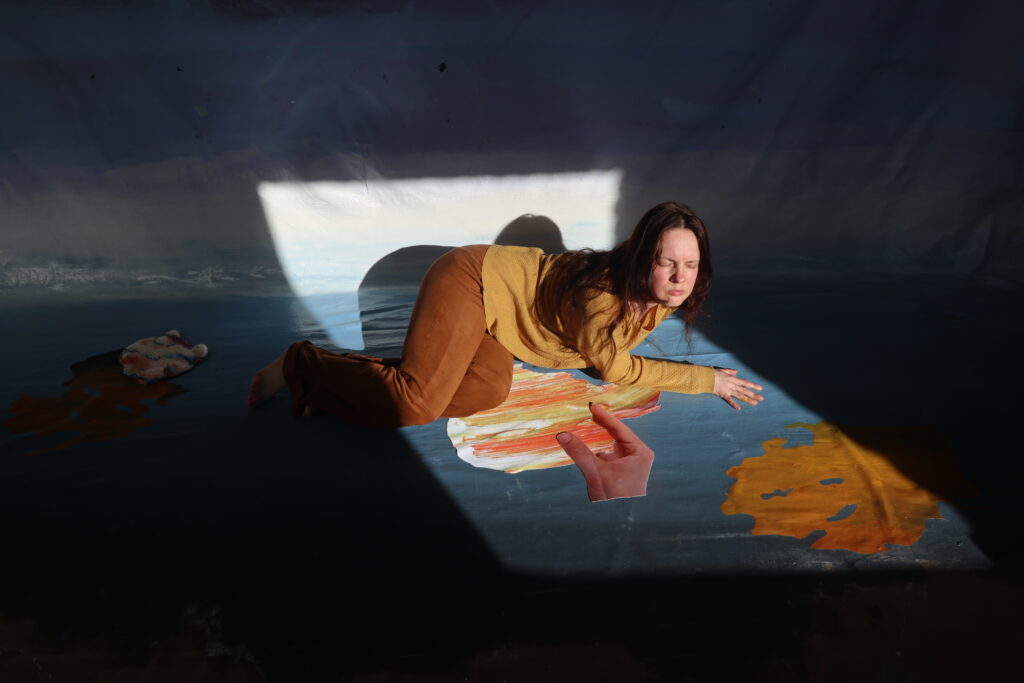
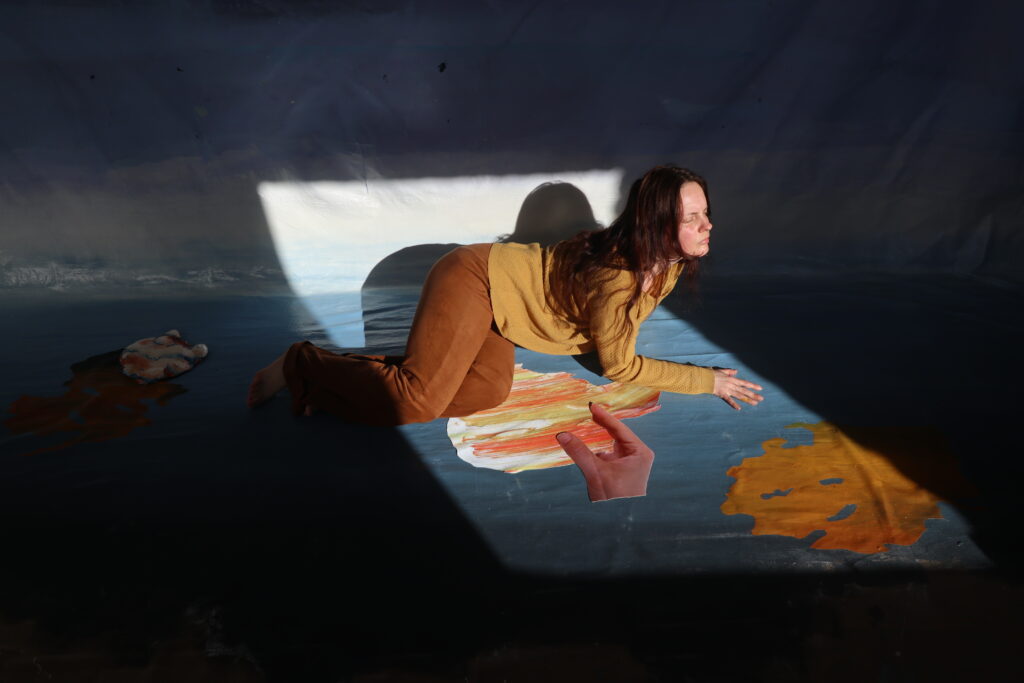
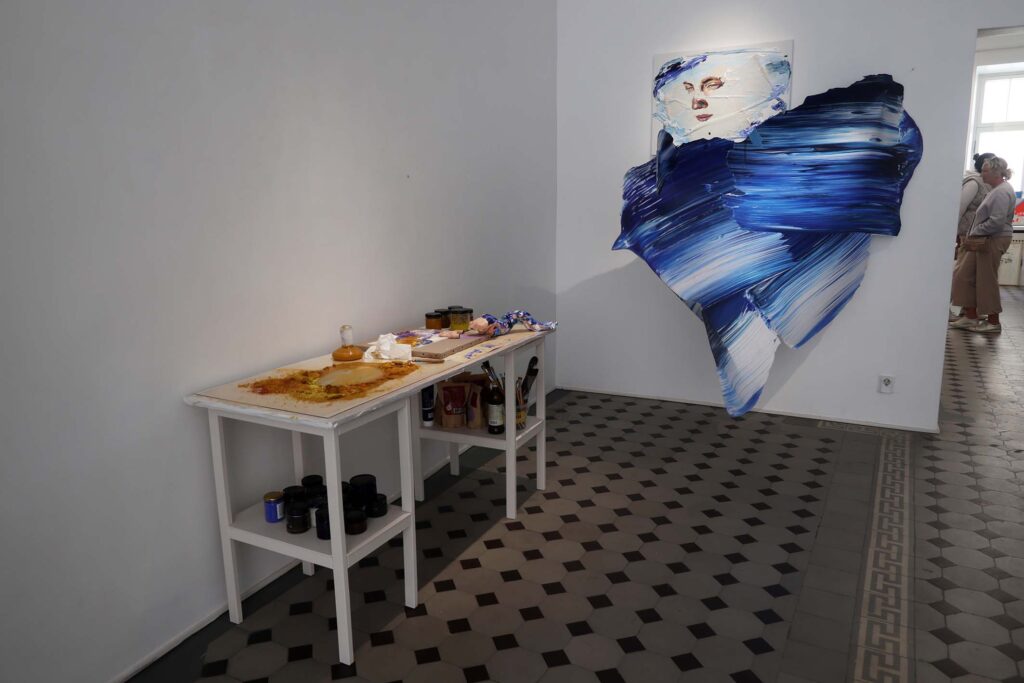
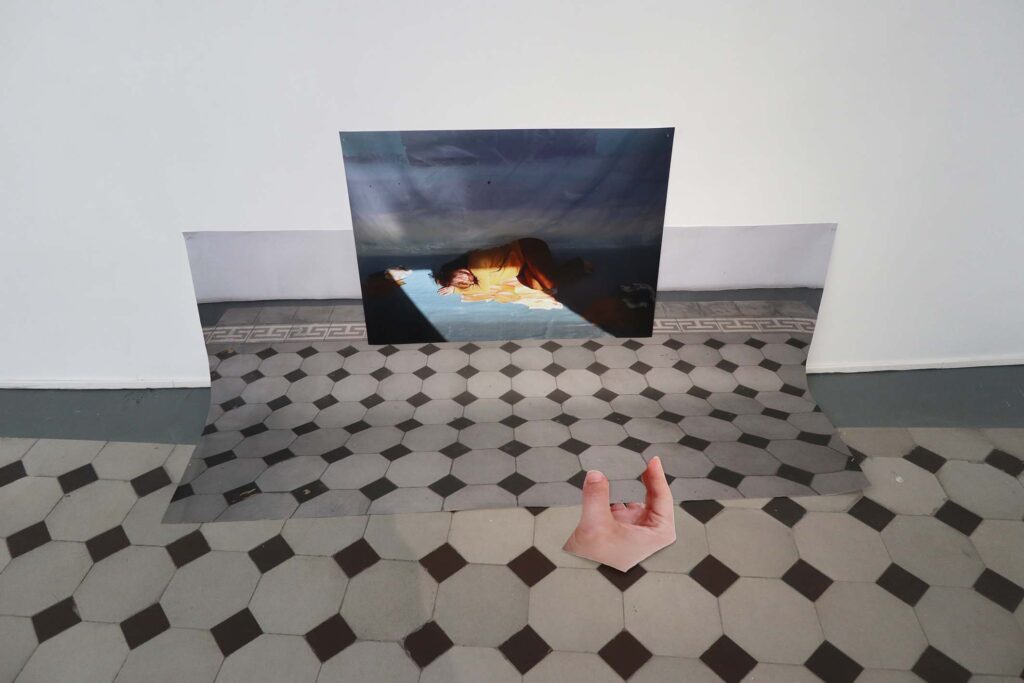
Liisi Eelmaa: “Hot afternoon, a little bit too airless, the studio is being heated from three windows by the spring sun. I am kept awake by the strong coffee and its stimulating taste.
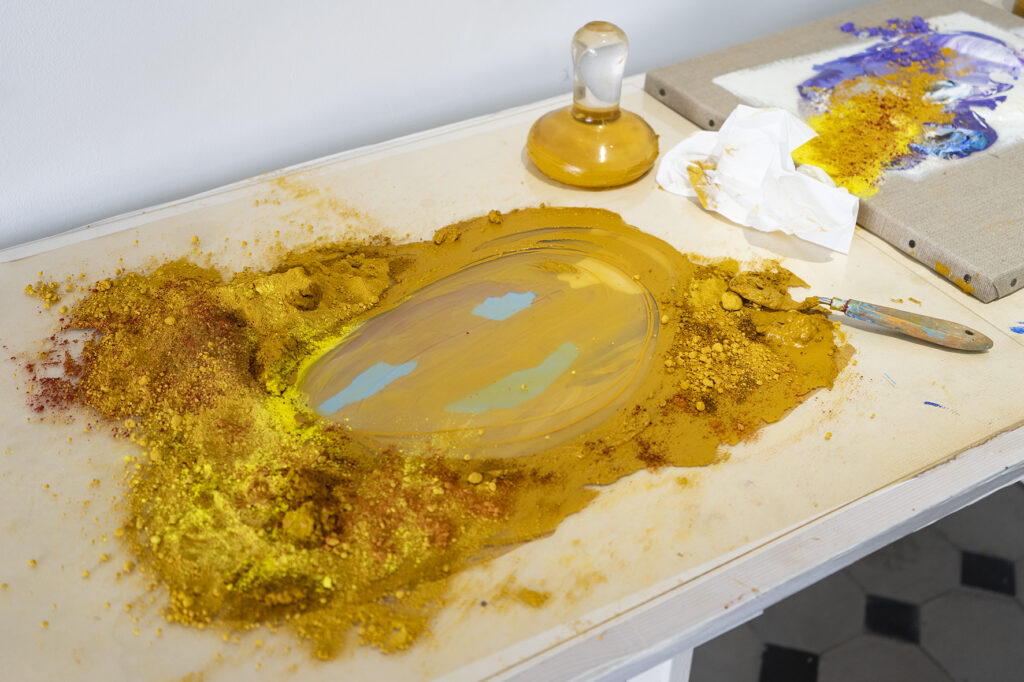
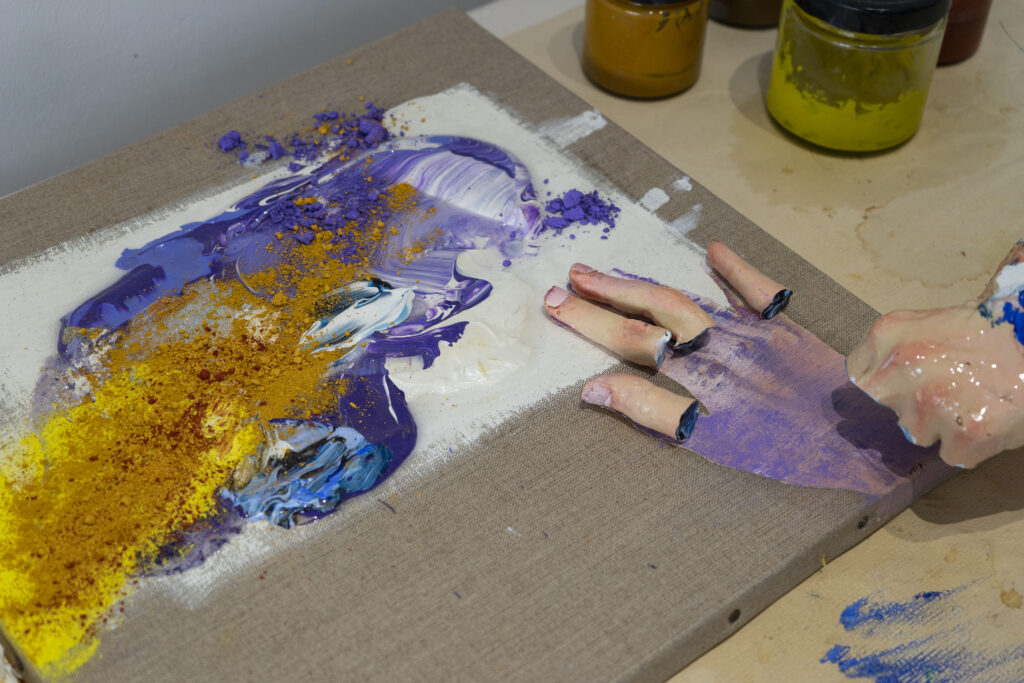
There is a bunch of different objects on the table: there are read and not yet read books, crumbs from white bread, eaten apple core, a fork, a cup, a notebook used for three years, papers, sketches, pencils, napkins, loudspeakers, some pencils, brushes, colors in tubes, bottles, walnut oil, a glass mortar, different natural mineral pigments. PIGMENT – MATTER, just matter, material. It can become anything, any object and being. It is especially pleasant to know that when putting your hand deep into the package, so it seems that the hand drowns into the yellow flour.
This flour could become spirit. Easily dusting material squeaks silently between the walnut oil mortar and glass. Transforming smoothly into creamy matter, to transform later even more and even further. If the objects aren’t made alive, they are just things, just as dust on the table.
The matter could become spirit, for that one must give soul to the matter. Making the matter alive, such as the job of the alchemist, who sees, uses and directs the forces of consciousness, energy and matter and understands the unity in them. Do I also transform together with the pigment, do I also change? Isn’t it then the karma of a human to be born, then become matter again and then get closer to one’s true nature, closer to spirit, year by year?
But where are the spirits who have left the material world?
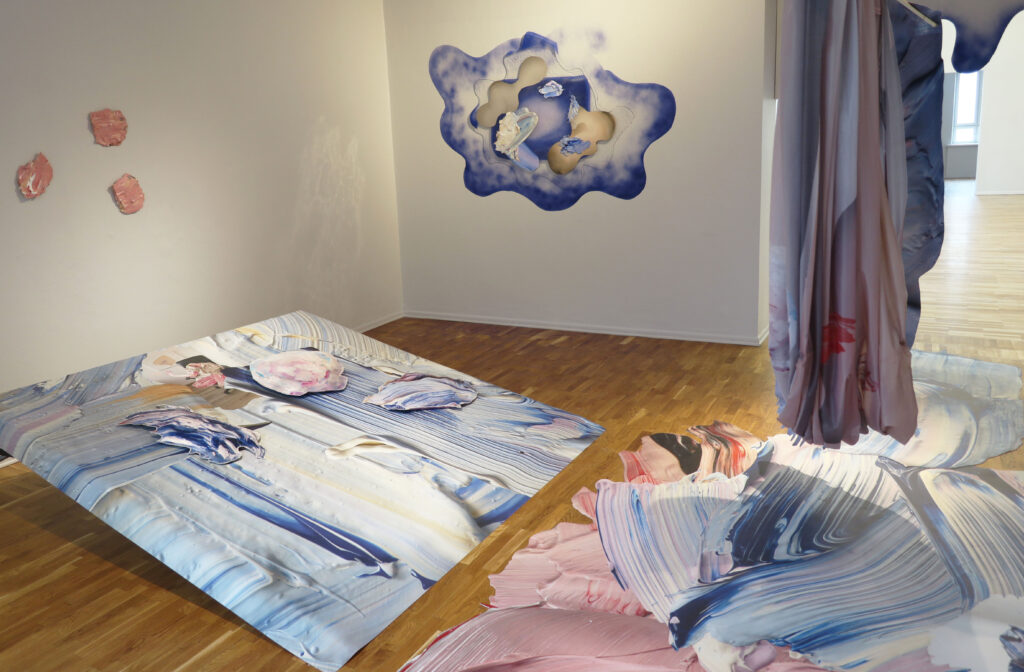
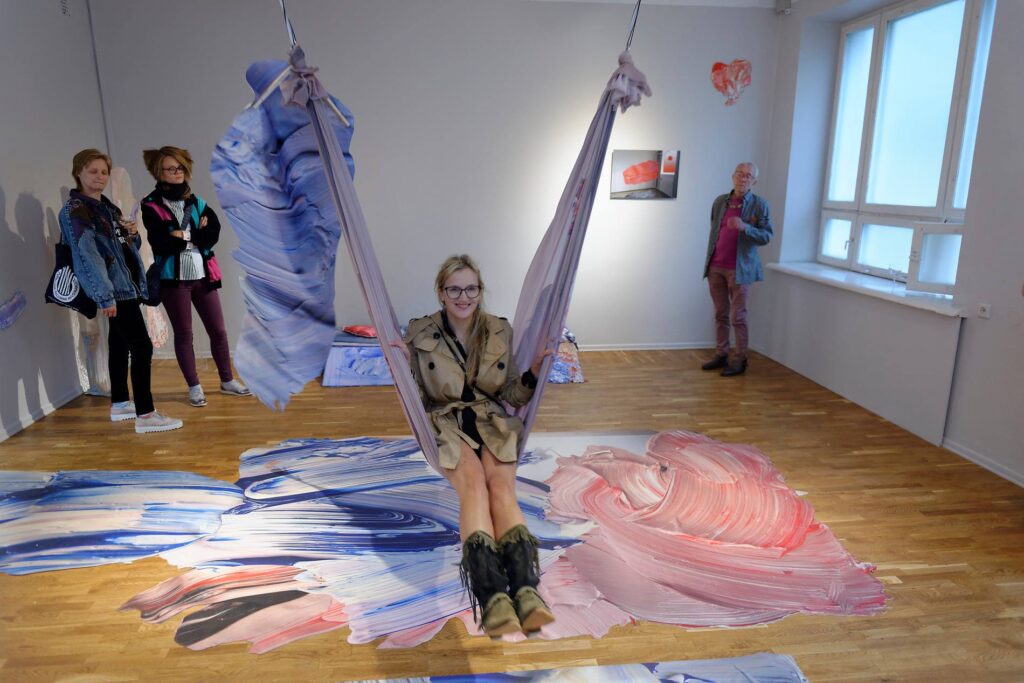
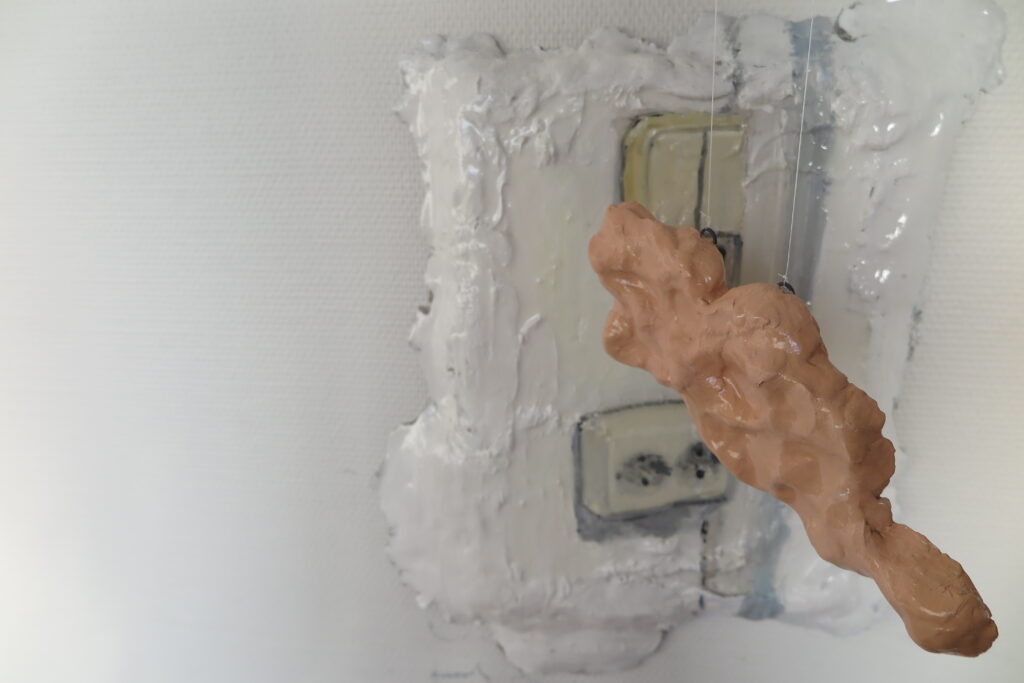
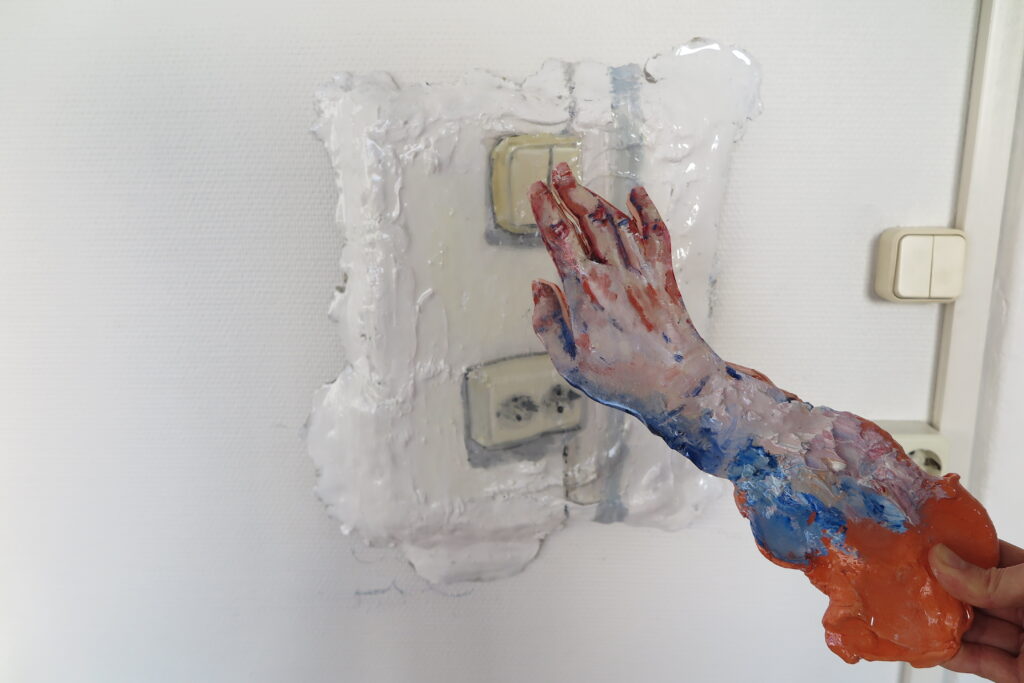
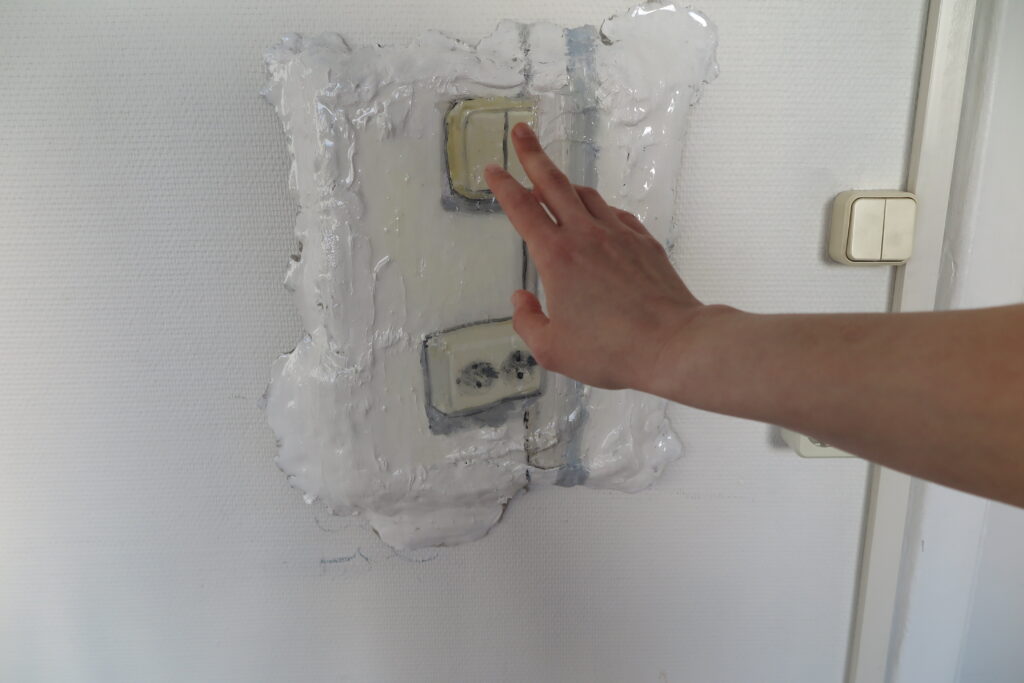
The holy places in nature, holy forests, stones, trees, soulful nature. The places, that have to do with the togetherness of the alive and the dead, because the matter and spirit have become one. There can also be a holy place in the spiritual sphere, such as the reflection of stones on the surface of water here in the material world. Spiritual sanctuary, that you constantly see in dreams and that is more real than any other room. First you have to create it in the sphere, so that it would reflect through all these elements. Through the holy forests, stones, trees, meadows, walls, electricity plugs, floors, tables, colors, through the brush and hand.”
Telliskivi Gallery
19.08.2021-19.09.2021
You can always make anything real.
Curator: Bianka Soe
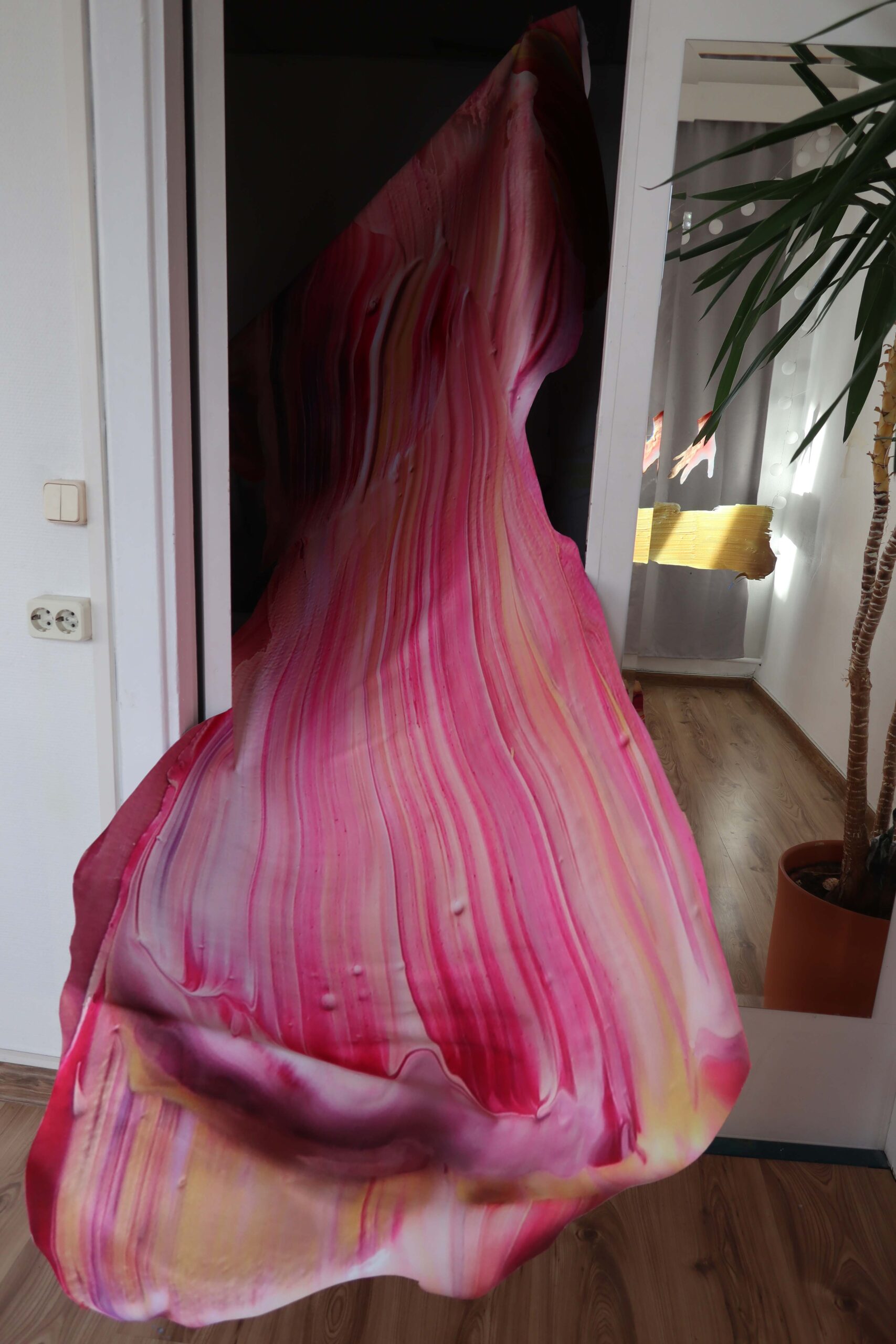
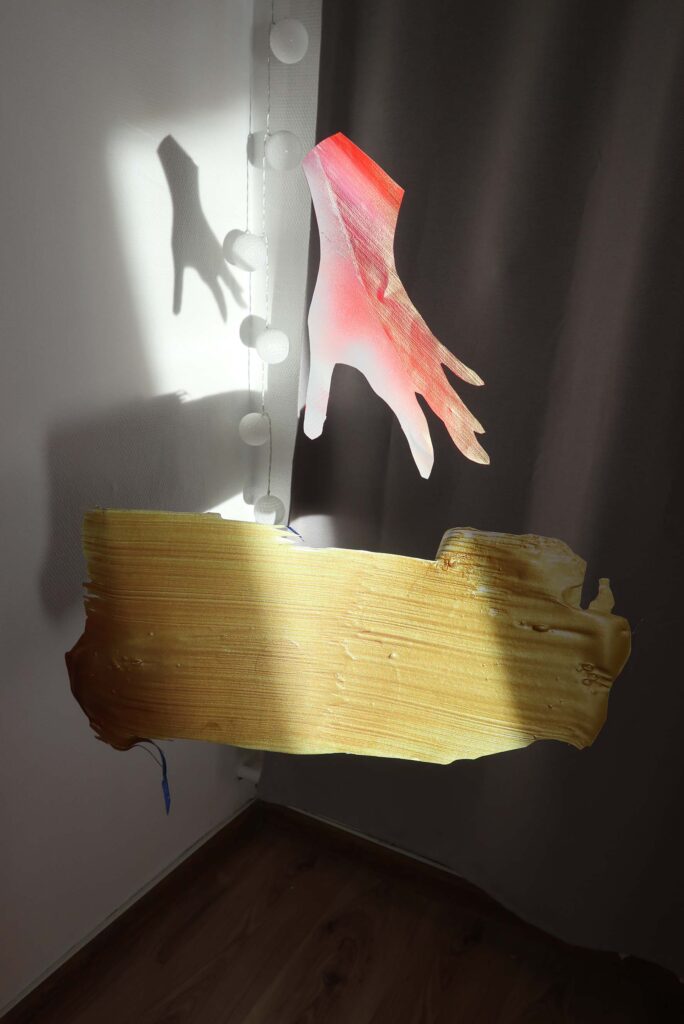
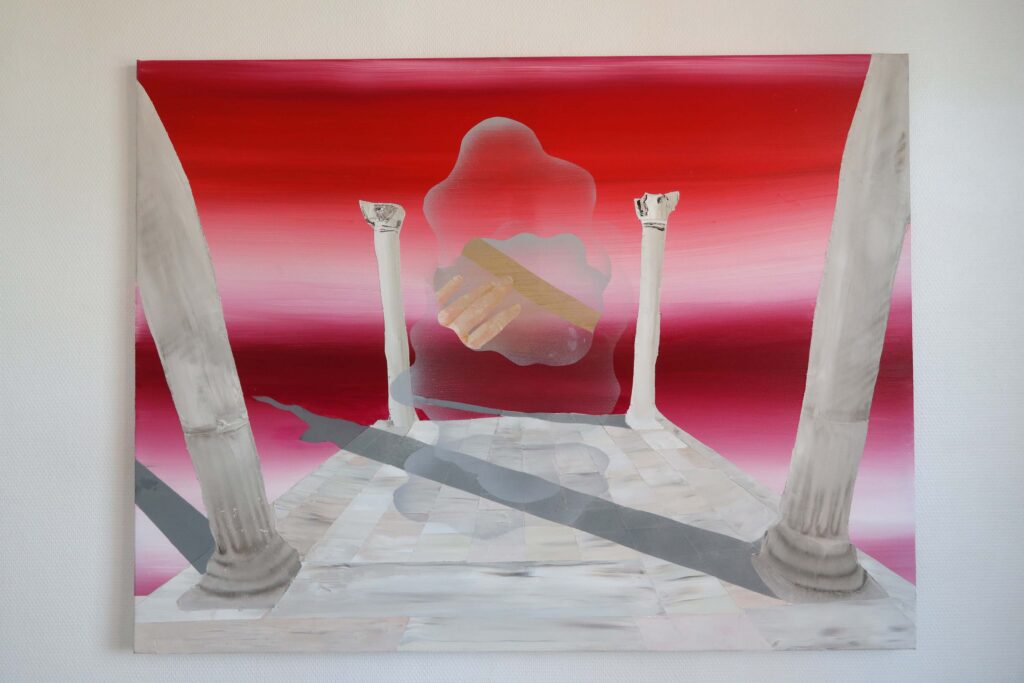
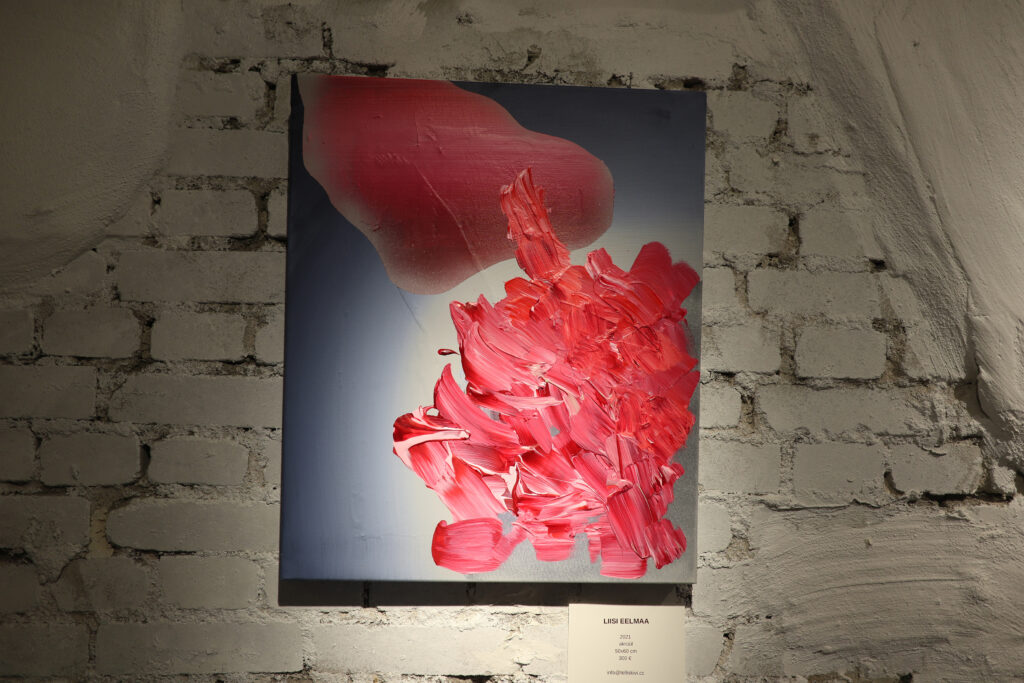
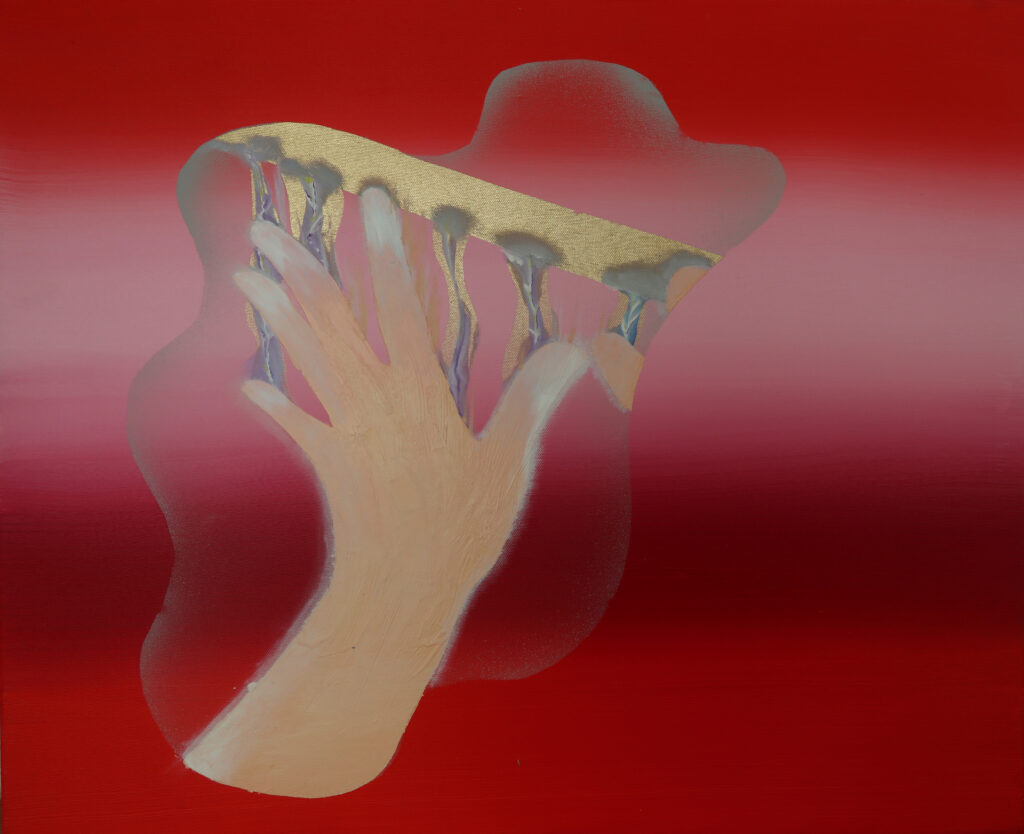
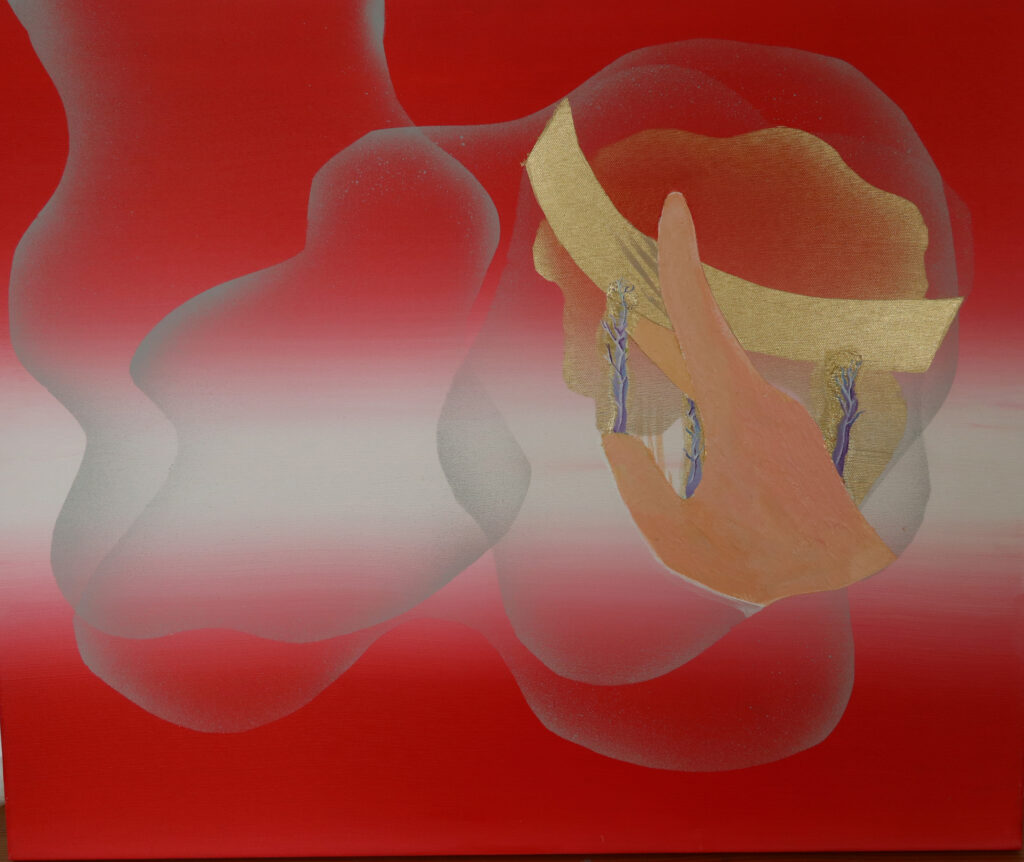
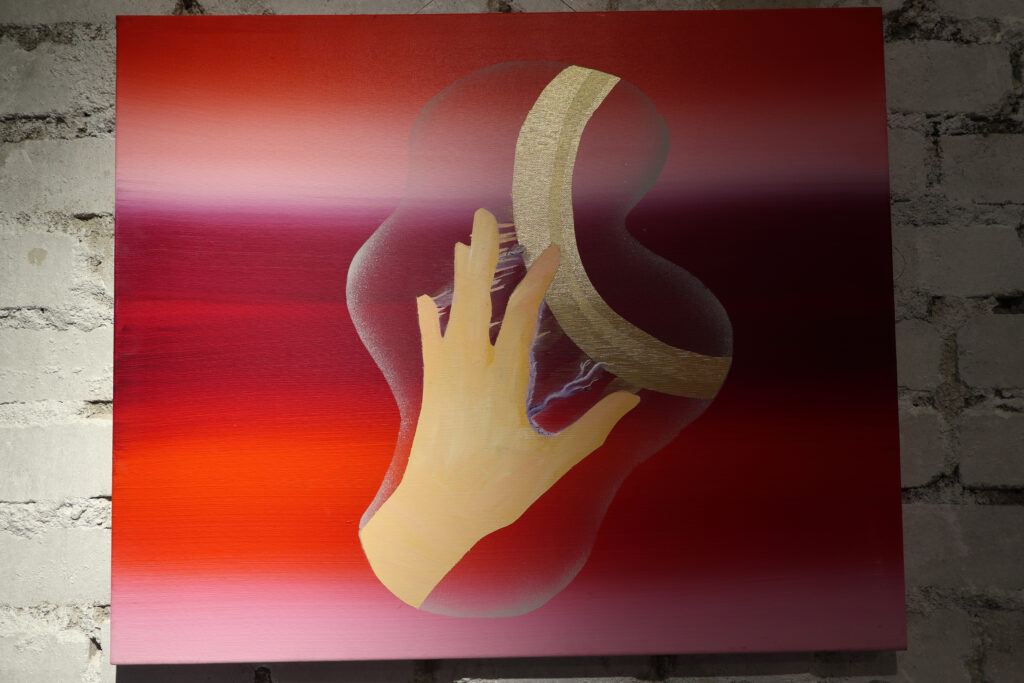
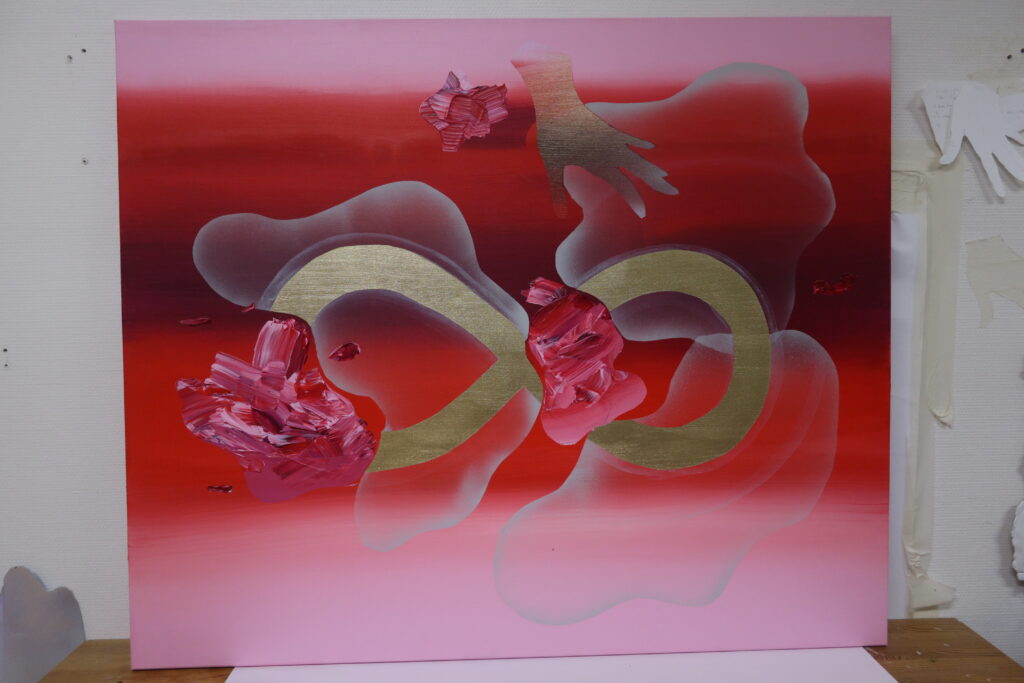
Liisi Eelmaa: ” What existed yesterday, is no longer here today. Being present is to see and feel the transformation of things, thoughts and energies that have no end nor beginning. Feelings and images that have approached the artist in dreams or real life are transformed into abstract or recognizable objects that travel from one work to another. Many elements – brush strokes, hands, portals – that are familiar from Liisi’s earlier works, meet and end up together in eternal landscapes inviting the viewer to run through alchemically changed worlds. These places make you feel good.”
Tartu Art House
27.08.2020-20.09.20
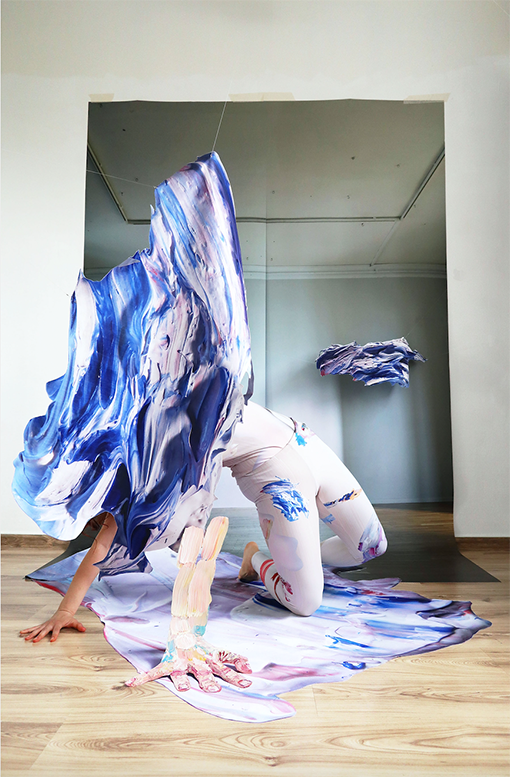
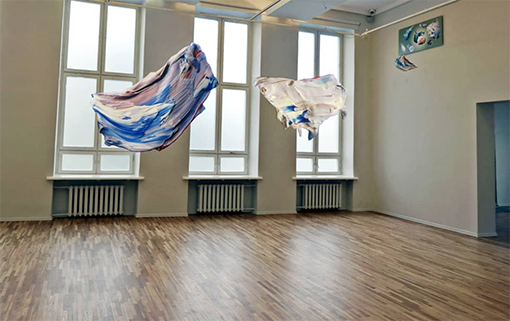
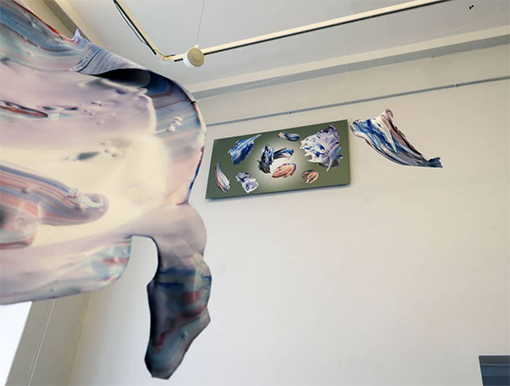
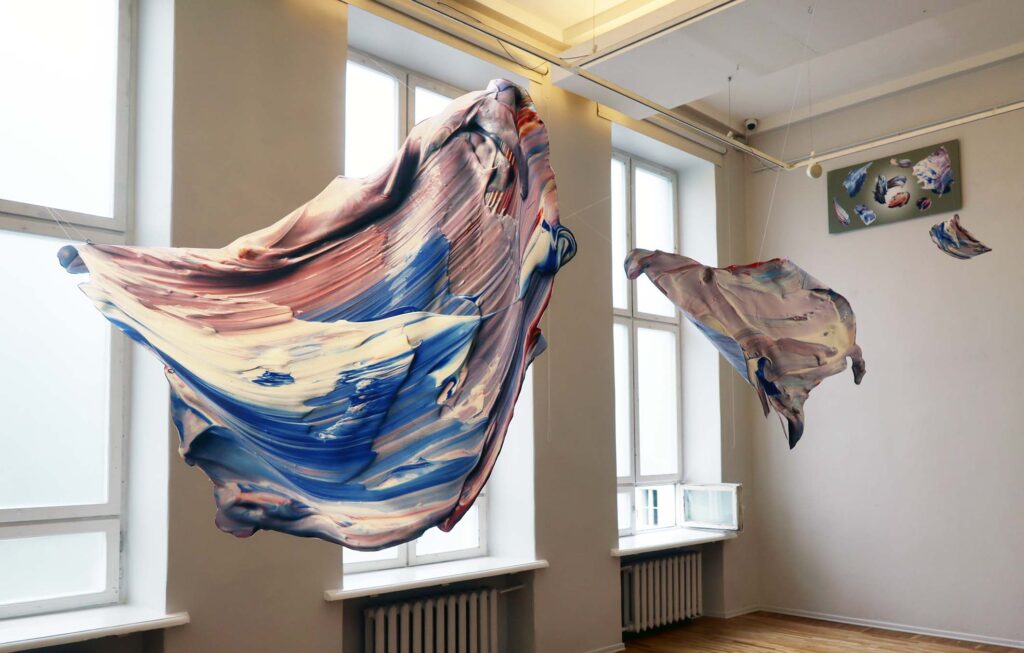
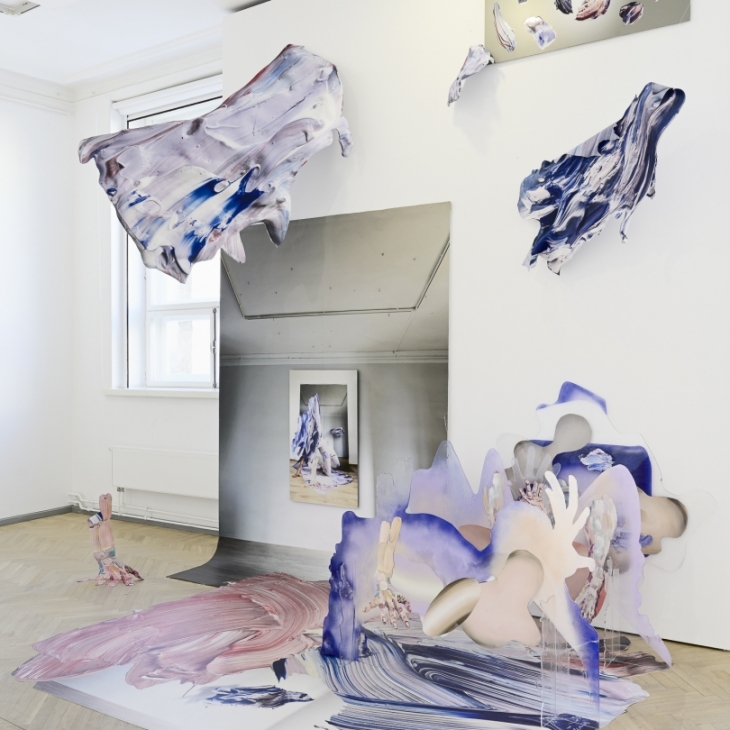
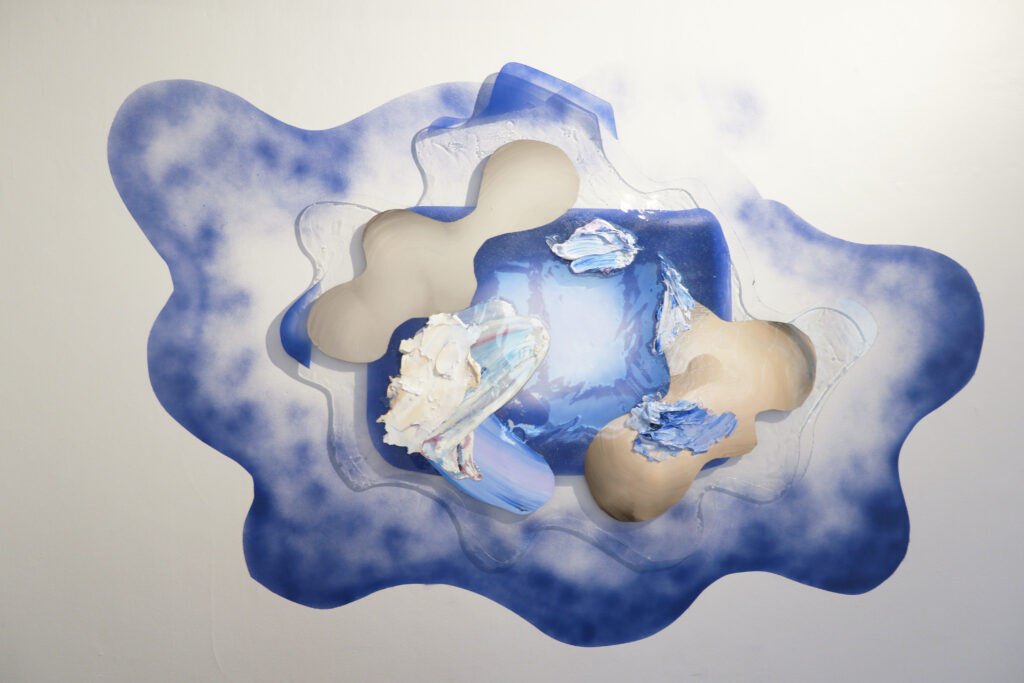
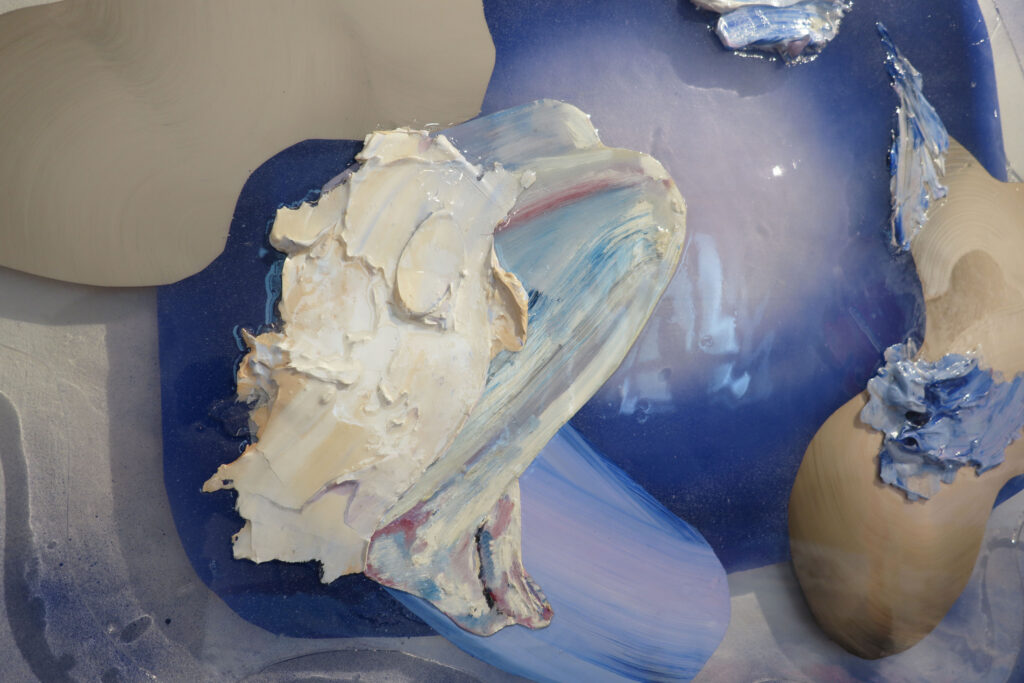
Liisi Eelmaa : „One of the most famous magical formulas is „abracadabra”. It is thought that in Aramaic it can be translated as “I create as I speak”. Thinking is magical, every item that surrounds us has started from thinking. Objects around us are either functional or of little practical use. Abstract paint, substance, beginning – ABRACADABRA.”
Gallery SEEK
23.08.2021-17.10.21
Isolation dialogues
Curator: Annika Haas, Johanna Rannula
More than 120 Estonian photographers are participating in Isolation Dialogues – a large-scale project of the Tallinn Museum of Photography. In order to provide creative output during the quarantine period and record the sense of the weird situation we are in at the moment, the Museum of Photography invited photographers and photo artists to hold photographic dialogues between themselves. The project that will run until the end of the emergency situation (17 May) is a constantly updated wordless dialogic reflection of isolation available at dialoogid.fotomuuseum.ee/. Time and again, the viewers can come back to the Isolation Dialogues and see how the emotions in seclusion have developed.
Annika Haas, initiator and lead of the project of the Museum of Photography explains the principles of the dialogues in the following way: “Artists participate in the project by invitation and they create their visual discussions in pairs. Each photo is a response to the previous photo of their discussion partner and that is how a dialogue is born. The topic of discussion does not have to be about being in isolation. It is the connecting point of the project that brings the photographers together. We record this extraordinary situation based on perception. The photographers may talk about anything they like in their visual dialogue, because in any case the current context of life is influenced by quarantine. The aim and result of the project is to convey the world view of each photographer that has come about through personal perception of isolation to the viewers – a reflection of the peculiar physical and mental situation of our time as an historical fact, but through art.”
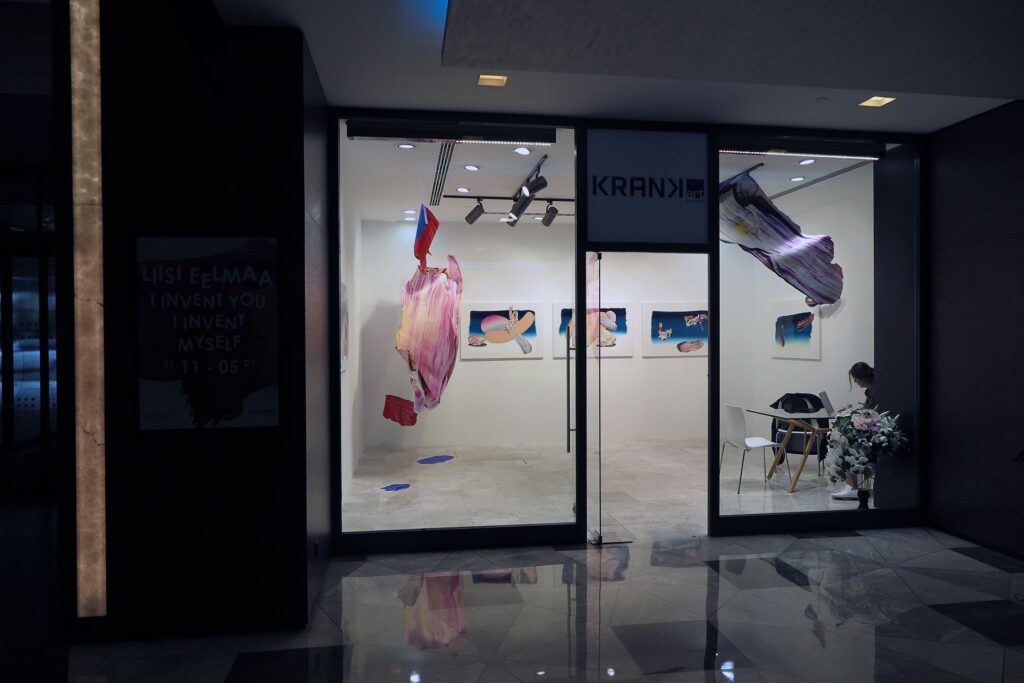
KRANK ART Gallery
21.11.2018-05.01.2019
I invent you, I invent myself
Curator: Sibel Erdamar
Sibel Erdamar:”Almost originating from vibrations in the human soul, the colours in this harmony also pronounce sounds so profoundly that it makes us think the artist was aiming to apply the methods of music to her own artistic practice. The rhythm in her works, the tendency towards using colours repeatedly, and the desire to set colours in motion also originate from this condition. The artist has opted for creating an intelligible language of colour and line, much like the language of sound and rhythm, without resorting to natural form or representation.
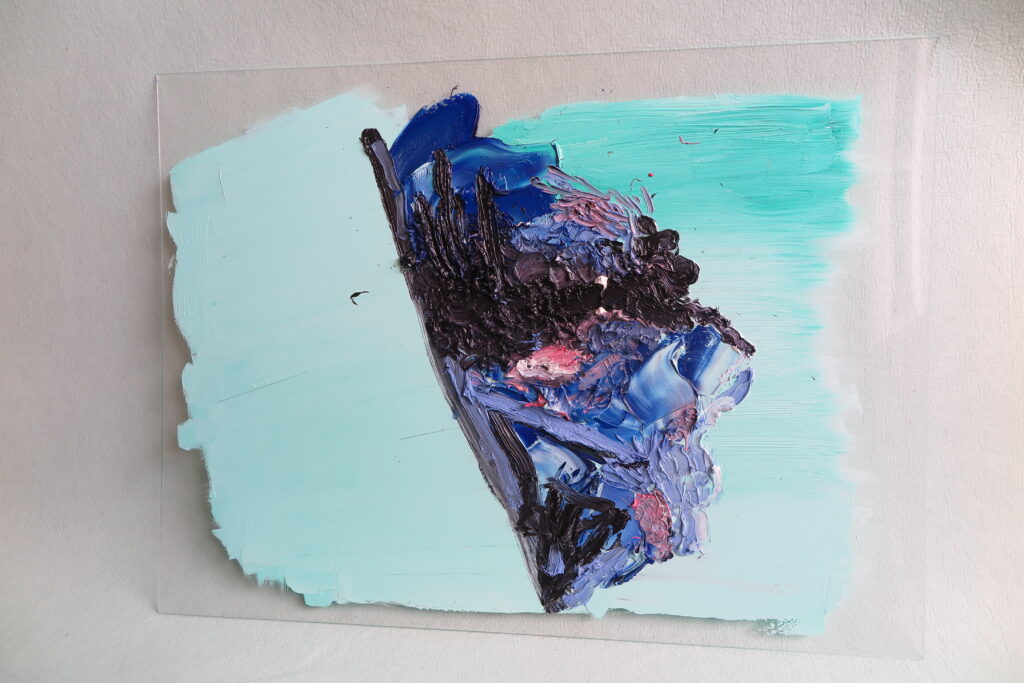
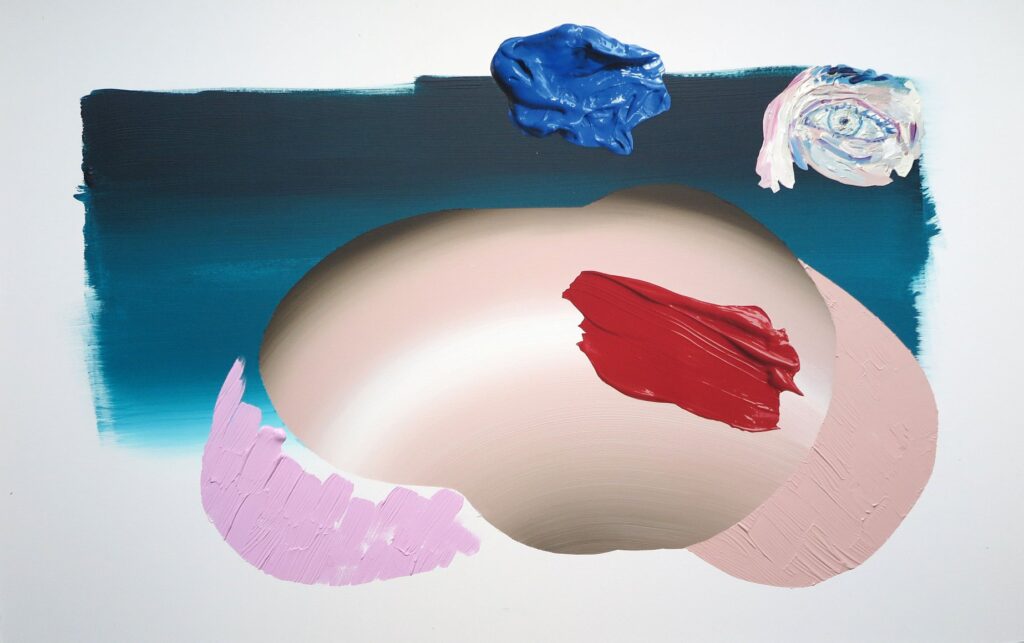
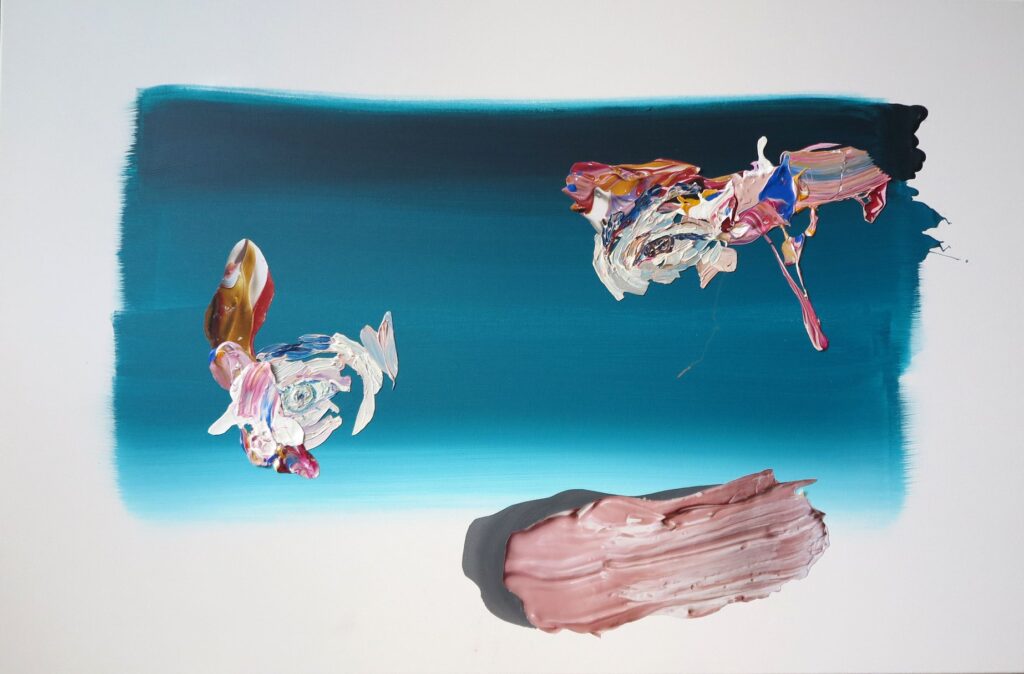
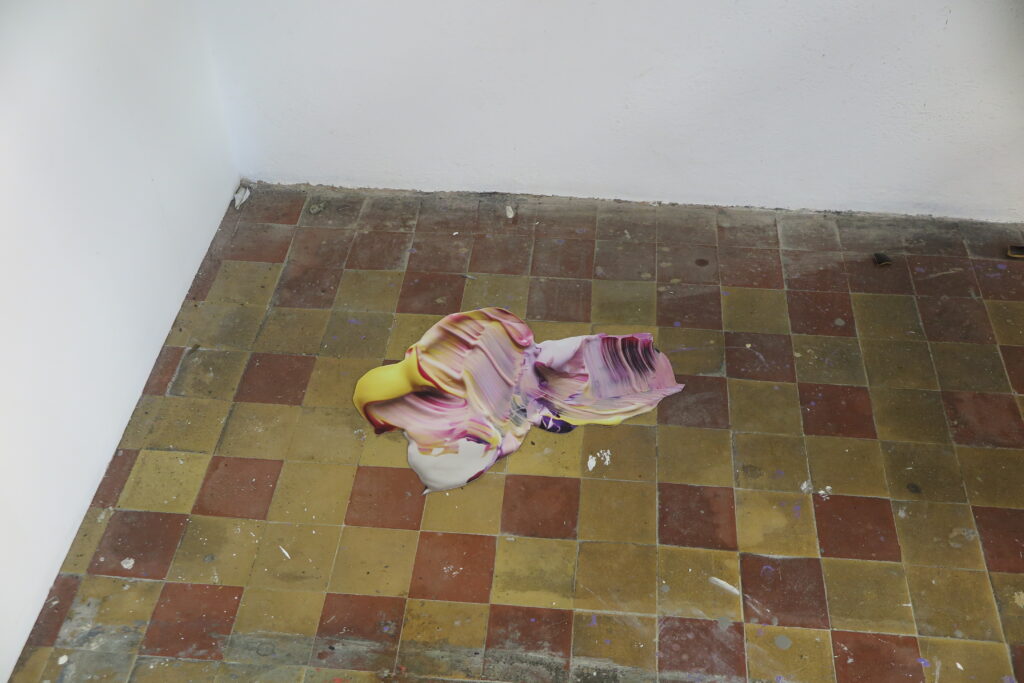
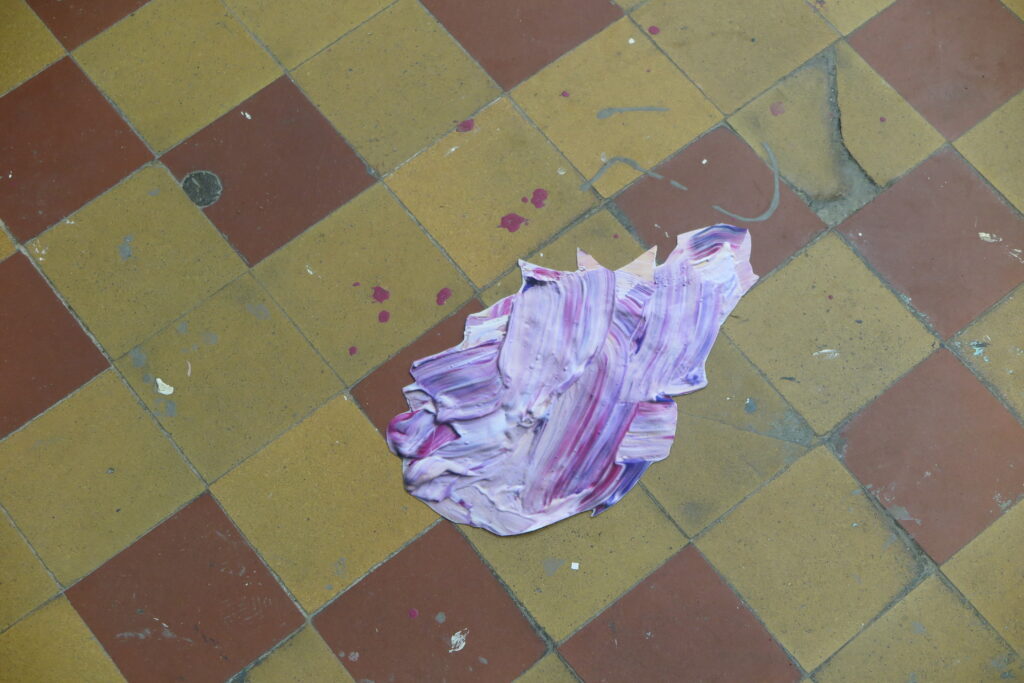
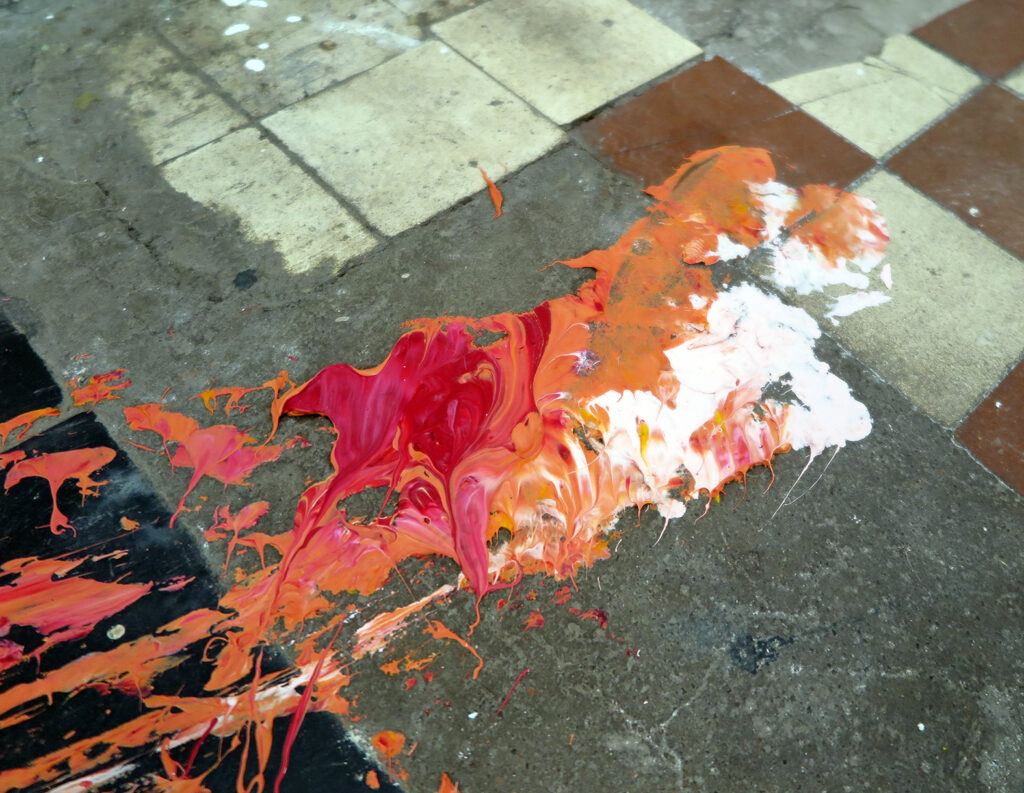
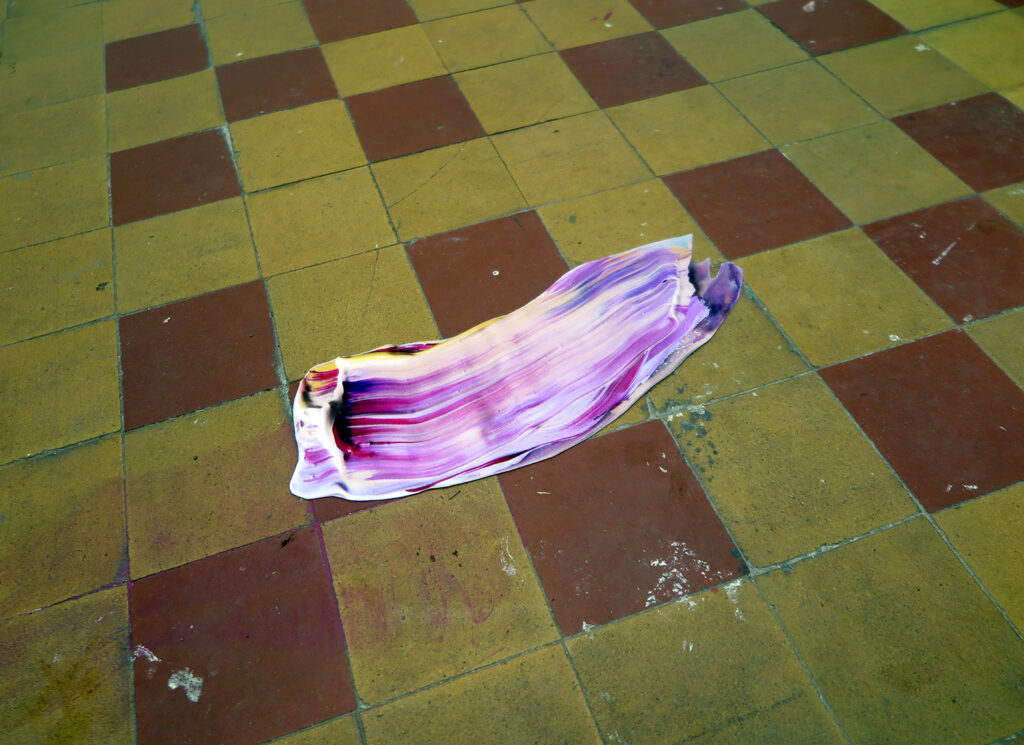
Present as a vague mass, paint is merely a mixture of colourant, pigment, binder and filler that will soon be transformed into an image. The moment of this transformation is what the artist finds most intriguing. Considering the first patch of colour, the beginning of any painting is abstract. The objective of Liisi is to emphasize the endeavour of creating something out of a patch of paint that is intrinsically abstract. And this equates the viewer with the artist as the creator of the image, providing both with the chance of entering into each other’s realm through their imaginative contribution.
Even if one fails to recall the effect of the colours when they move their eyes away, the peripheral impression created by different colours becomes the starting point of a series of sensations. Each colour creates its own distinct spiritual vibration. These “fragrant colours” of Liisi Eelmaa stimulate the sense of touch as much as the sense of smell. With their satiny texture, the colours arouse an impulse to touch. And the artist’s installations respond to this desire.
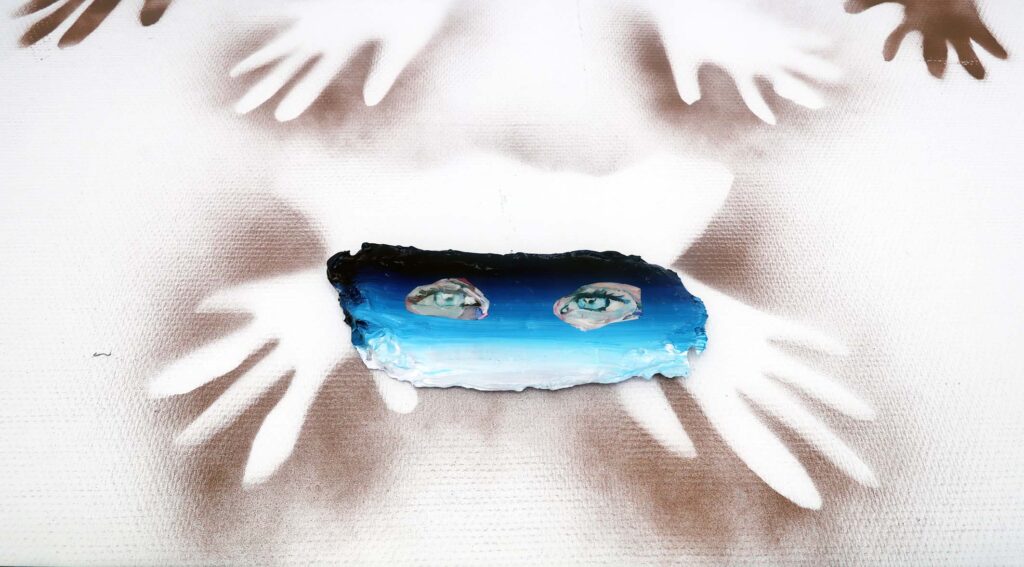
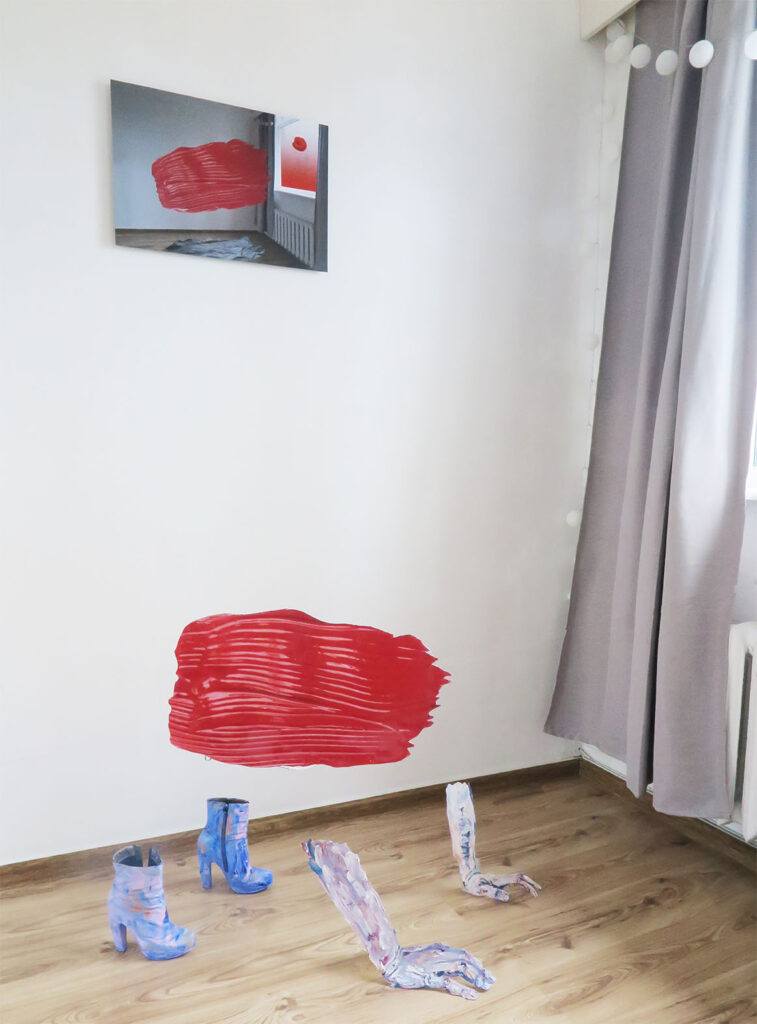
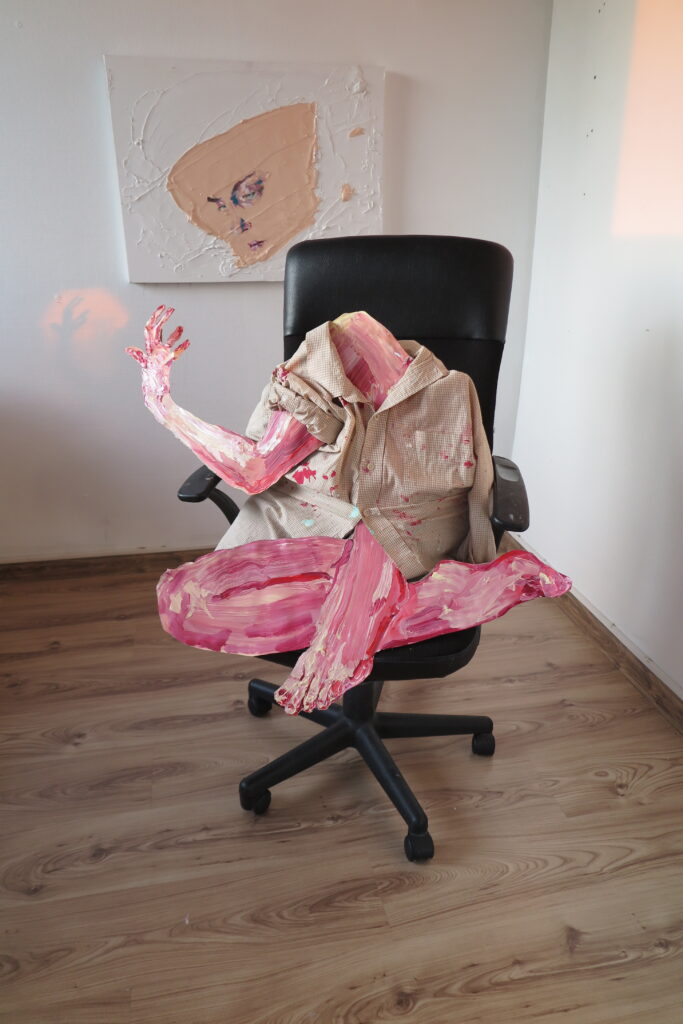
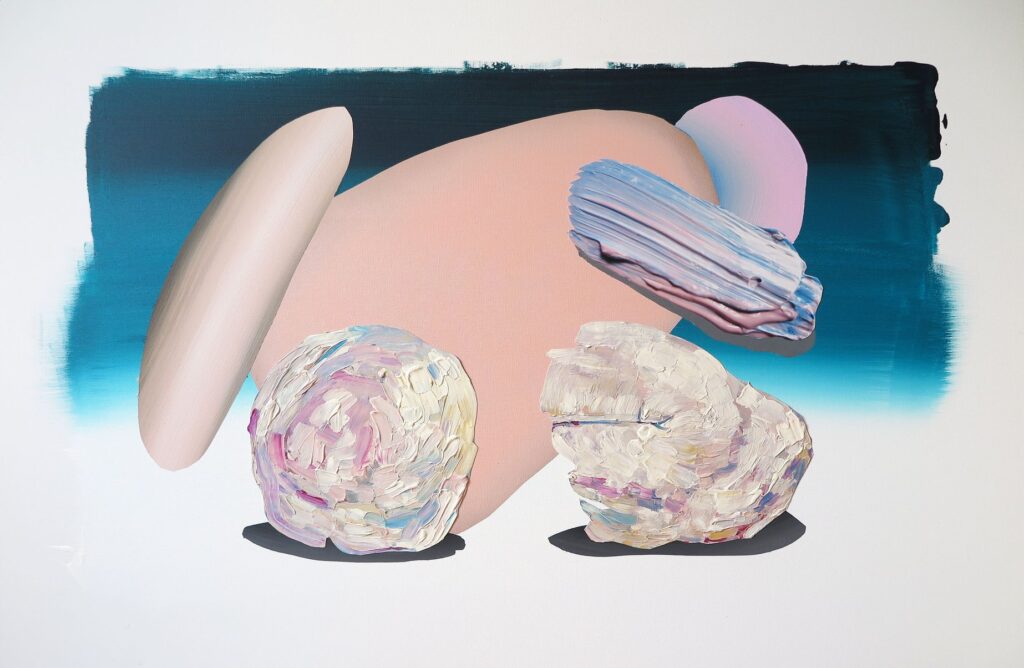
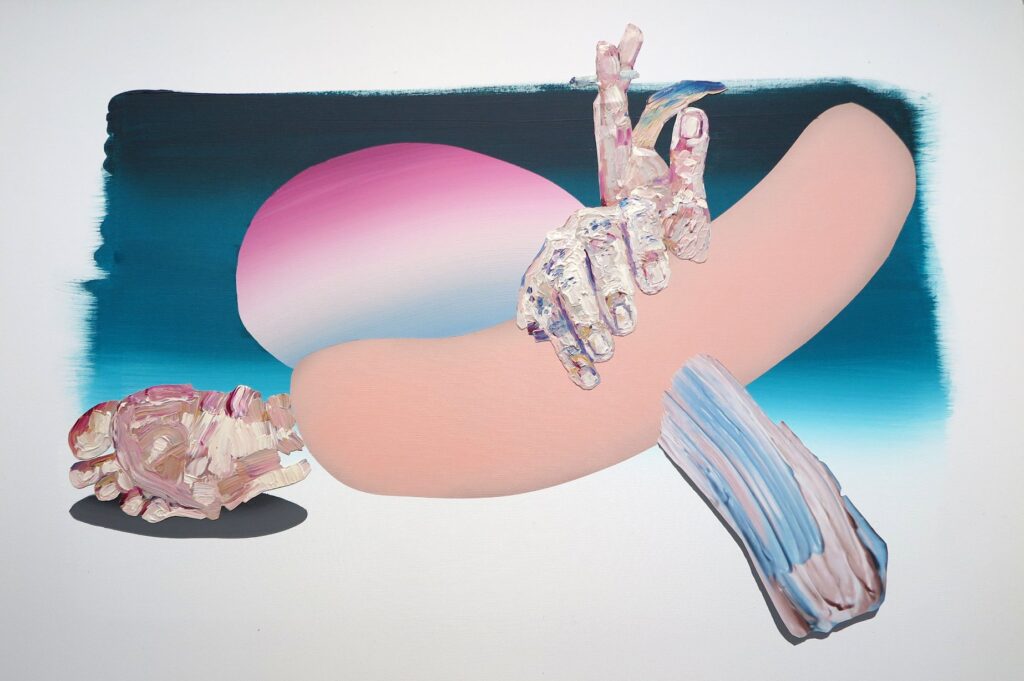
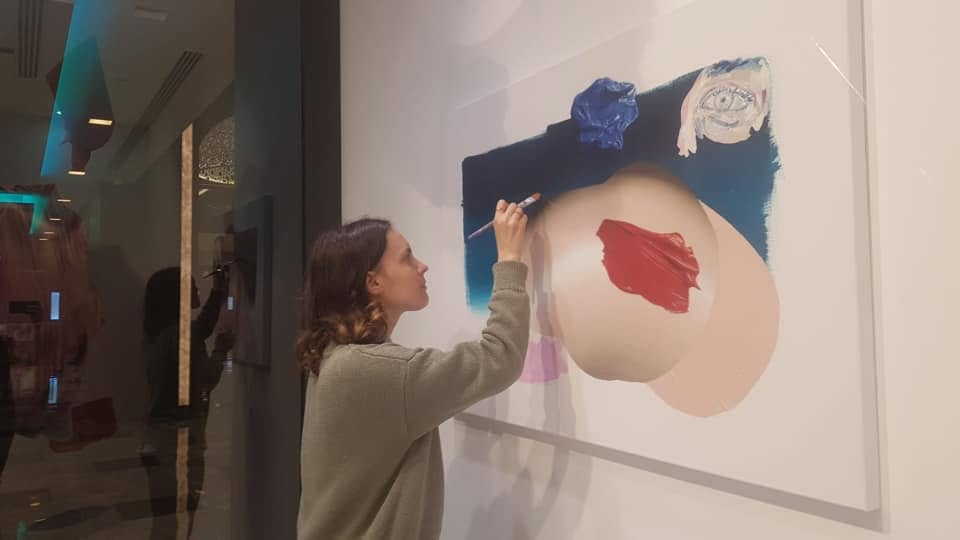
In the four paintings included in the exhibition, Liisi Eelmaa has placed parts of the body amongst her harmonic gestures. The vitality of the body is not a result of the combination of its parts.
A human body acquires its vitality when a certain convergence, some kind of encounter, occurs between the viewer and the viewed, the toucher and the touched, between one eye and the other. Nature, on the other hand, with all its layers, with its attributes, as light, colour, depth, is only present when it generates a resonance in our body, and when these are acknowledged by our body. The artist’s harmonic gestures and the accompanying body parts are nothing more than her absorbed, in the riddle of abstract or figurative visibility. The painter’s eye sees the world. It sees the missing piece in the world in terms of a painting, the colour on the palette that the painting calls for, and the painting that would be an answer to the lack of all these when it is finalised.
The painting and photograph that form the starting point of the installations are the constituent parts of the artistic practice of Estonian artist Liisi Eelmaa; she often combines and mixes photographs and paintings in her works. In merging two different mediums, she often contemplates the limits of painting, questioning how we perceive paint as a substance, and when this substance starts to become an image. She examines whether painting could or could not be a medium for describing things that do not exist, and explores how a photograph allows presenting things that already exist.
*”Since the times of cave paintings people have depicted a better life – better than the one at hand. Creating an image was supposed to fulfil a wish. While observing the timeline between the cave era and today’s world, we can see imagination coming to life to the fullest. Everything that we have now has been gained thanks to the imagination of our ancestors. What will come in the future is created right now”, says Liisi Eelmaa, whose works originate from – but not as a mirror of – the realities pertaining to her era, and they embody a profound and potent power that reflects the future.”
Hobusepea Gallery
13.06.2018-09.07.2018
Gently in the air
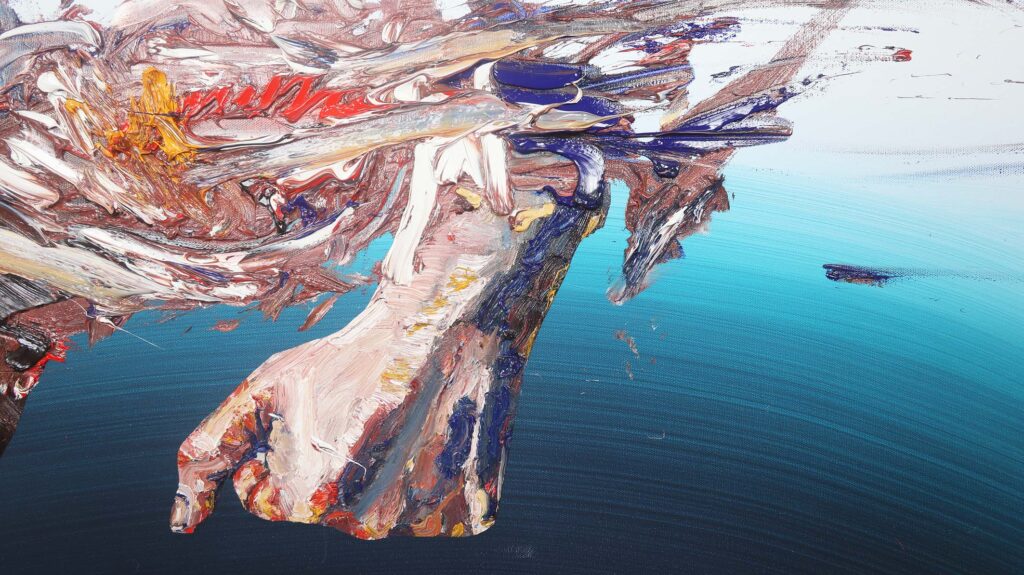
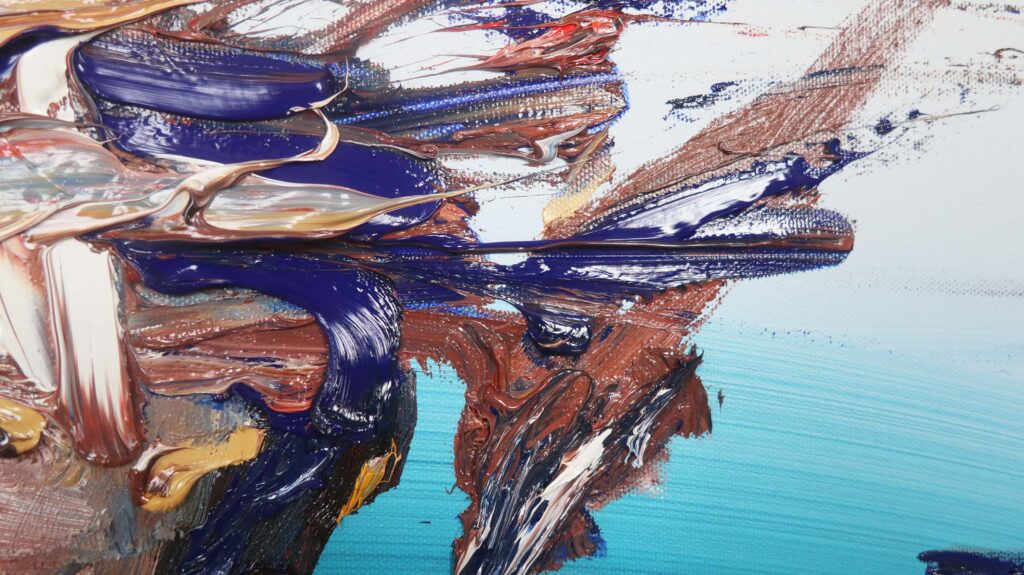
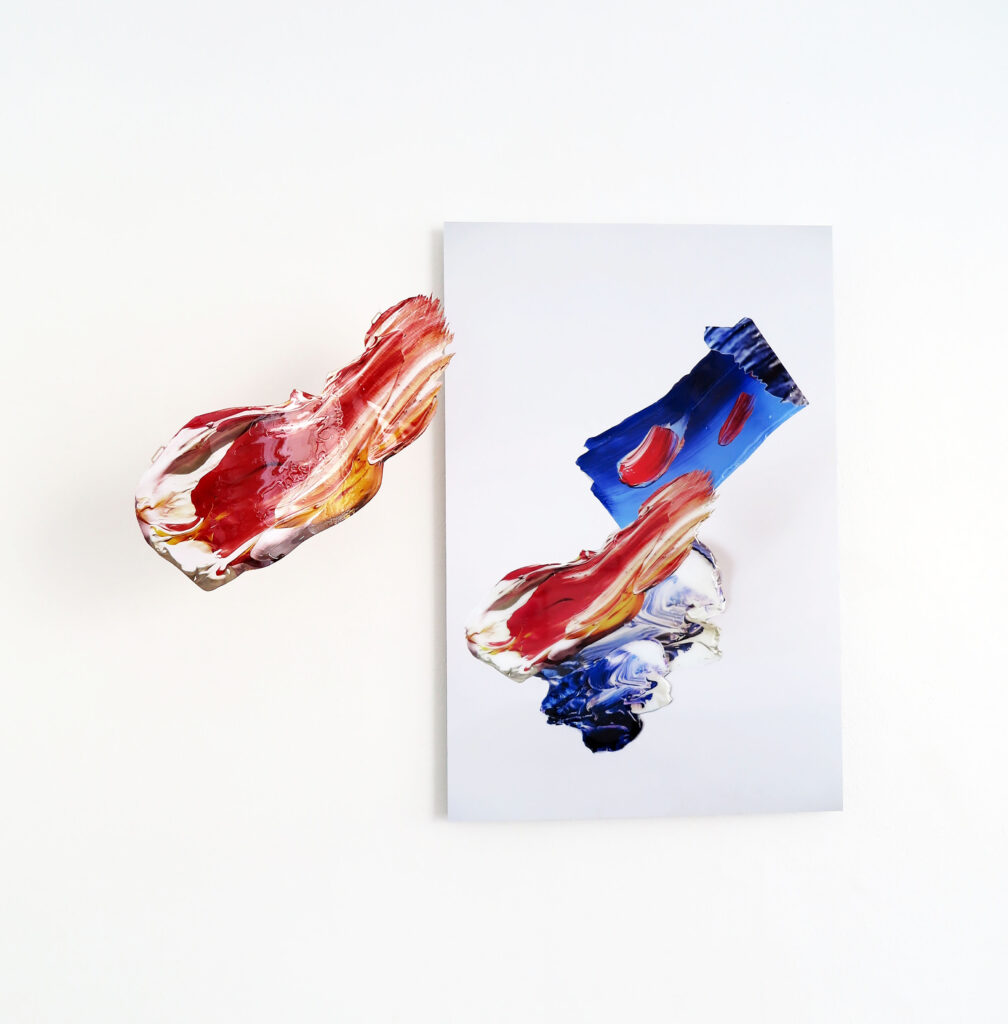
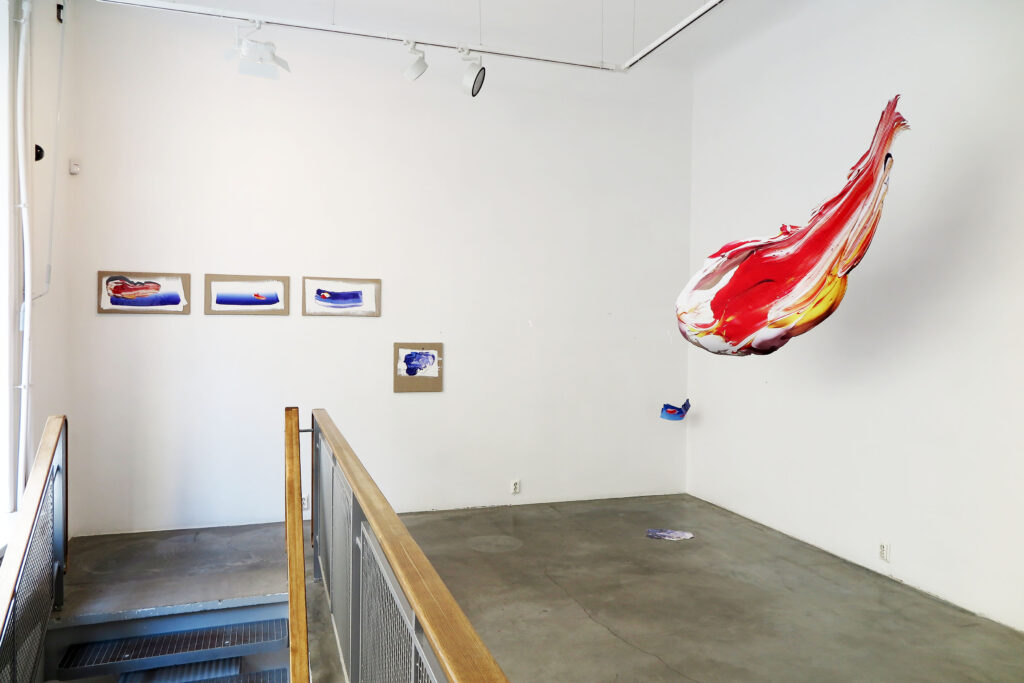
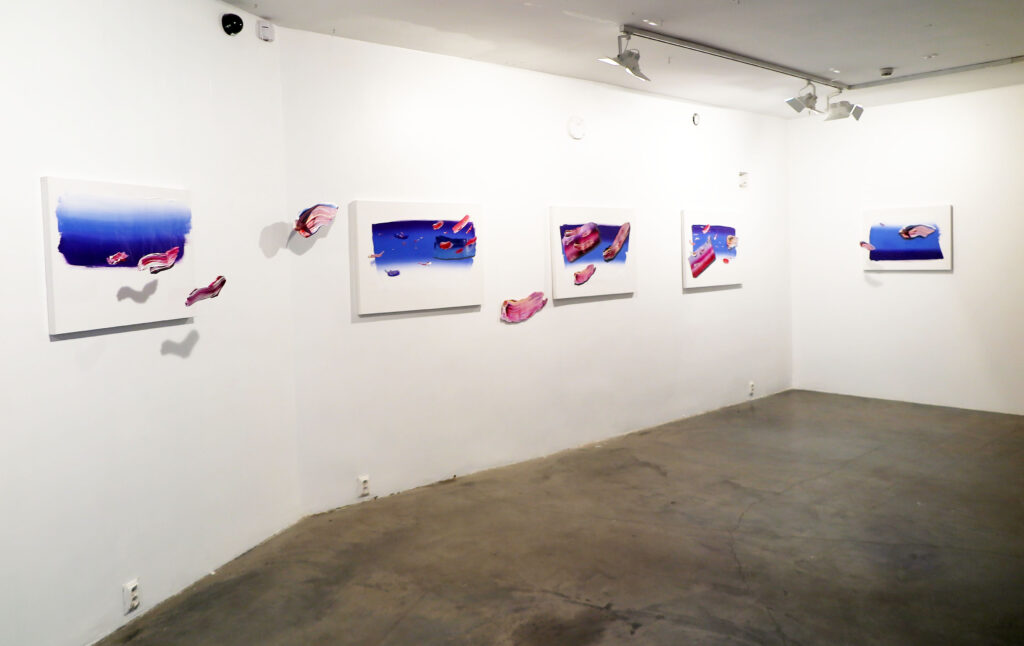
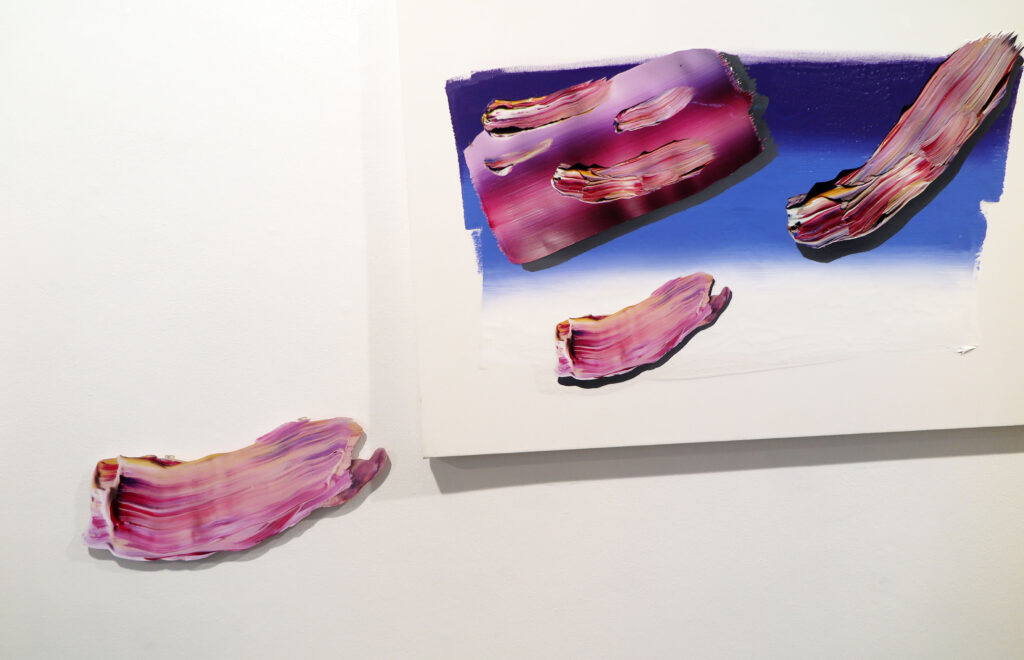
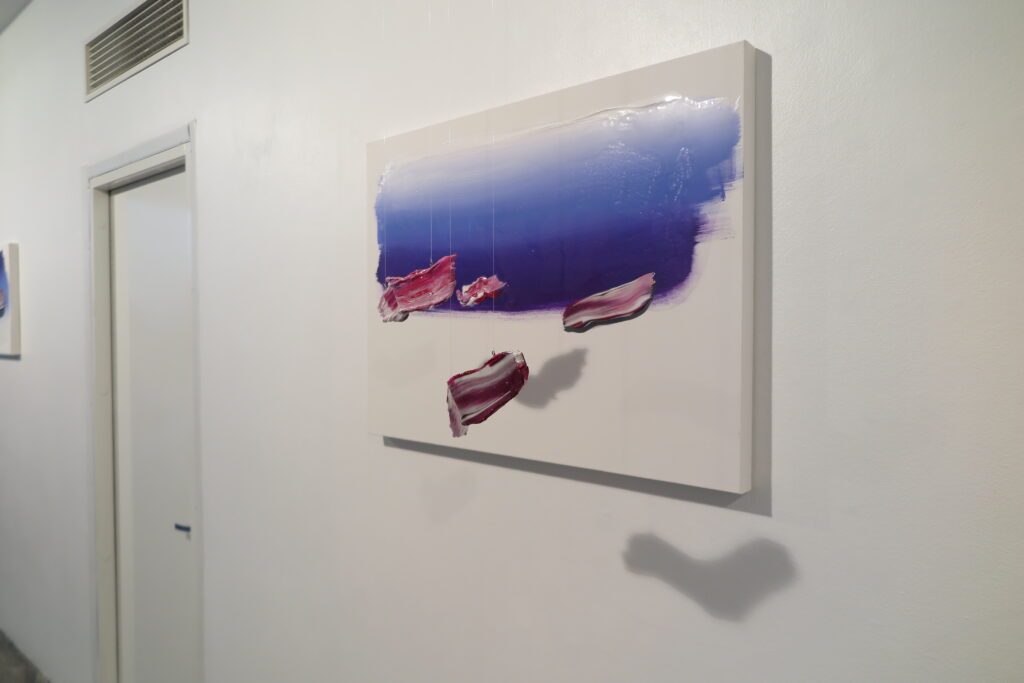
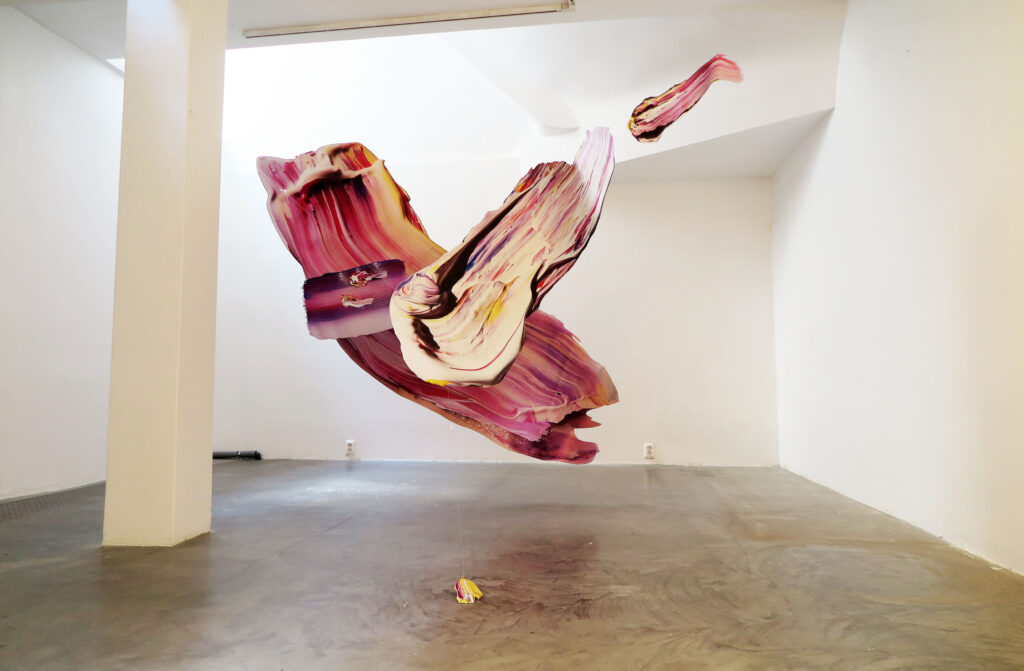
Liisi Eelmaa: “Paint on the table is still a vague mass of dye, pigment, binder and filler and is about to transform into an image. I am interested in the moment when the transformation takes place. The color may still seem random, without the status of an image, but there is already a decision and an effort to do something with it. The beginning of any painting is abstract when looking at the first spot of color. My goal is to play up the effort to make something out of a spot of color. The spot of color itself is abstract in nature, it can be seen as abstract art. Abstract art, in turn, provides an opportunity to enter a free visual space, where the viewer is as active a receiver as the artist as the creator of the image, – both contribute using their imagination.
Since the times of cave painting, a better life has been depicted, what was hoped to happen. The creation of an image was supposed to fulfill a wish. If we look at where humanity has moved since the time when we lived in caves, we can see imagination on a full scale “Everything we have today has been achieved thanks to the imagination of our ancestors. What will come in the future is being created now.”
Estonian Museum of Contemporary Art
05.08.2017-10.09.2017
“(Hyper)emotional: YOU”
Curator: Evelyn Raudsepp
Artists: Liisi Eelmaa, Corinna Helenelund, Krõõt Juurak, Kimmo Modig, Mihkel Tomberg, Sigrid Viir, Julian Weber.
The international exhibition project “(Hyper)Emotional: YOU” established three equally important conditions for creating the exhibition: collectivity, scenography, and emotional manipulation. Curated by Evelyn Raudsepp, the project continues the concept of the meeting between the “art hall” — the black box and the white cube — first introduced by the V Artishok Biennial. This concept approaches exhibition-making through the lens of the performing arts. On this occasion, collectivity and scenography have been adopted from the performing arts as working methods: artists active in different fields (visual and performing arts, scenography, choreography, and sound) were tasked with collaboratively creating an environment encompassing the entire EKKM building.
The artists’ shared thematic point of departure was emotional manipulation. On the one hand, this derives from theatrical practice: a performance always takes the audience’s emotional reception into account and seeks to guide and influence it (through narrative and acting), or even manipulate it (through sound and lighting). On the other hand, the project is informed by the emotionally charged communication and manipulation characteristic of the post-truth era, particularly in the media, which has fostered an image of a (hyper)emotional society.
Noblessner Gallery
30.05.2017-12.06.2027
TASE ’17. EKA